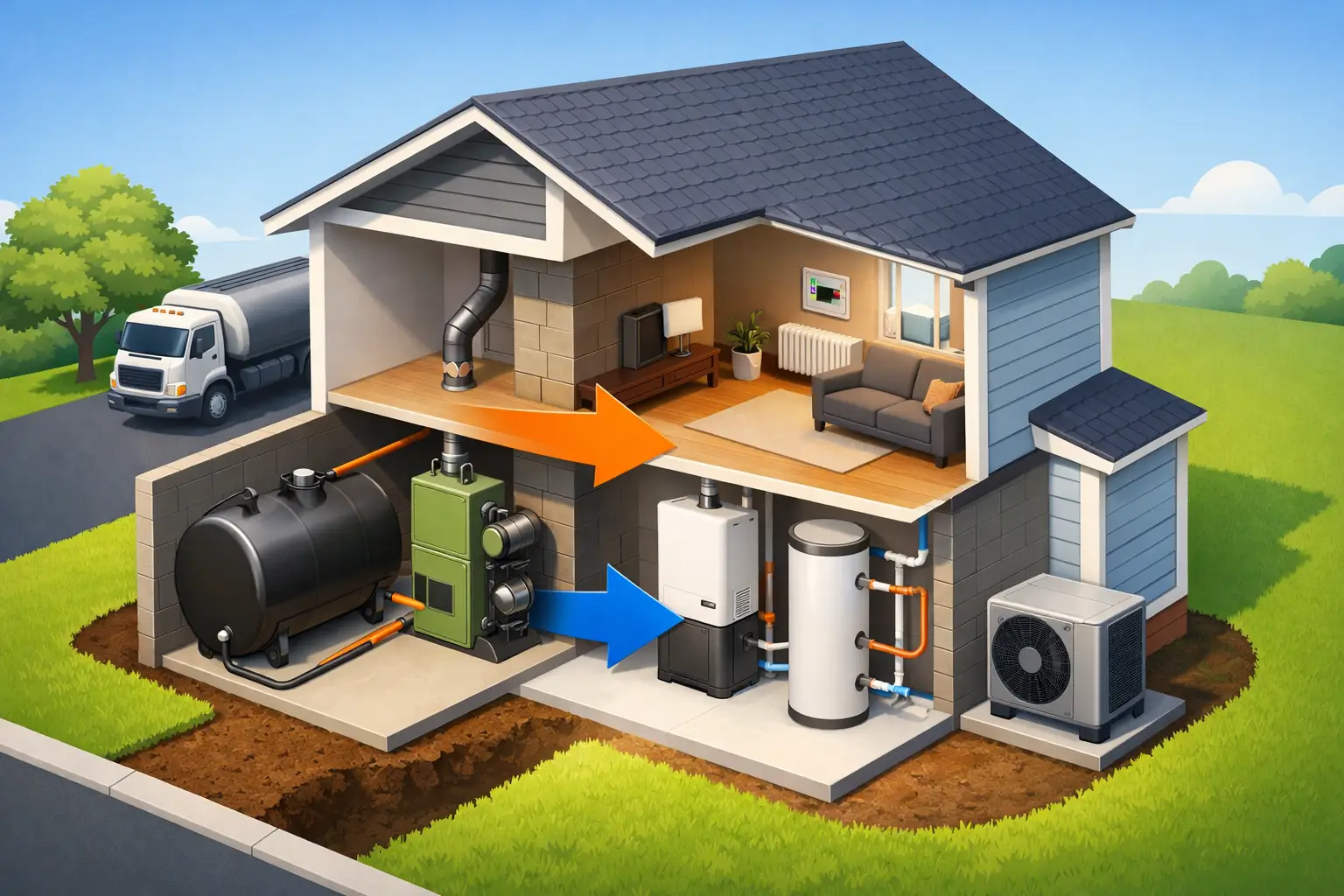
A lot of homeowners start thinking about fuel conversion after one frustrating winter bill, one aging boiler, or one oil delivery that never feels cheap enough. An oil heating conversion example helps make the decision more real. Instead of talking in general terms, it shows what typically changes in the home, what stays the same, and where the budget usually goes.
For many homes in Hudson and nearby Massachusetts communities, the most common conversion is from oil heat to natural gas. Sometimes that means replacing an old oil boiler with a high-efficiency gas boiler. In other homes, it may involve changing the water heater at the same time, removing an old oil tank, and updating venting, piping, and controls so the whole system works safely and efficiently.
A practical oil heating conversion example
Picture a 2,000-square-foot colonial with older baseboard heat and a 20-plus-year-old oil boiler in the basement. The home heats well enough, but the boiler is noisy, service calls are becoming more frequent, and winter fuel costs feel unpredictable. The homeowners also have an older standalone water heater that is nearing the end of its life.
In this oil heating conversion example, the homeowners decide to convert from oil to gas during the off-season rather than waiting for a heating emergency in January. Their existing distribution system – the baseboard piping and heating zones – is still in decent condition, so the project focuses on the equipment and fuel source rather than a full heating redesign.
The work usually starts with evaluating whether natural gas is available at the street and what the utility requires before service can be brought to the house. Once gas availability is confirmed, the next step is determining whether a boiler replacement makes the most sense or whether a different heating approach is worth considering. In many Massachusetts homes with existing hydronic heat, staying with a boiler is the most practical path because the house is already built around hot water heat.
What changes during the conversion
The old oil boiler is removed, and if there is an oil tank in the basement or outside, that tank is addressed as part of the project plan. A new gas boiler is installed and sized to the home’s heating needs. Proper sizing matters. Bigger is not better. An oversized boiler can short cycle, waste fuel, and wear out sooner.
The venting system often changes too. Older oil systems may use a chimney setup that is not appropriate for a new high-efficiency gas boiler without modifications. Depending on the equipment selected, the new unit may vent through sidewall piping or require chimney liner work. Gas piping has to be installed to code, and the controls, thermostats, circulators, and safety devices all need to work together with the new boiler.
If the homeowners want to improve efficiency further, this is also a common time to combine the heating upgrade with an indirect water heater. That setup uses the boiler to heat domestic hot water and can be a smart fit for households that use a lot of hot water. For some families, a separate gas water heater or hybrid option may make more sense. It depends on the home’s layout, usage patterns, and budget.
Typical costs in an oil heating conversion example
This is the part homeowners usually want first, and the honest answer is that costs vary quite a bit. A straightforward conversion where gas is readily available, the existing heating distribution is in good shape, and the project only involves boiler replacement will cost less than a job that also needs gas service work, chimney modifications, water heater replacement, oil tank removal, and system repairs.
In a simple scenario, the investment may center mostly on the new boiler, installation labor, permits, venting, and startup. In a more involved project, costs rise because there are more moving parts and more trades involved. If the old near-boiler piping is in poor condition, if zoning controls are outdated, or if the chimney needs significant work, the estimate will reflect that.
The most useful way to look at cost is not just upfront price, but total value over time. Homeowners often compare current oil spending, expected repair costs on older equipment, and the benefits of a more efficient gas system. Monthly fuel savings are possible, but they are not identical in every house. Weather, insulation, thermostat settings, and equipment quality all affect the result.
The trade-offs homeowners should understand
A good conversion is not just about changing fuel. It is about making sure the new system fits the house. That means being honest about trade-offs.
Natural gas can offer convenience because homeowners are not scheduling oil deliveries or watching tank levels during cold weather. Modern gas boilers can also provide excellent efficiency and reliable comfort. But a conversion is still a significant project, and it only makes financial sense when the existing oil system is aging, inefficient, costly to maintain, or no longer aligned with the homeowner’s goals.
There are also homes where conversion is less straightforward. If gas is not available nearby, extending service may not be practical. If the home’s heat distribution is failing, the project may be larger than expected. And if the oil boiler is relatively new and operating efficiently, the payback may not be as strong as it would be with older equipment.
That is why a site-specific evaluation matters more than broad promises. The best answer is based on the actual house, not a one-size-fits-all sales pitch.
Oil heating conversion example: timeline and process
Most homeowners want to know how disruptive the work will be. In many cases, the physical installation can be completed within a few days, but the full timeline depends on equipment availability, permitting, utility coordination, and whether additional work is needed.
A planned conversion usually follows a clear path. First comes the in-home assessment to review the existing boiler, heat emitters, fuel setup, venting, and hot water needs. Then the contractor builds a scope of work and confirms equipment selection. If gas service needs to be brought to the home, there may be utility scheduling involved before installation can begin.
Once the project starts, the old oil equipment is disconnected and removed. The new boiler and related components are installed, piped, vented, wired, filled, tested, and tuned. At the end, the system should be walked through with the homeowner so they understand basic operation, maintenance needs, and what to watch for over time.
That last step matters. A conversion is not just a swap. Homeowners should know how to run the system efficiently and when to schedule service. Good installation and clear communication go hand in hand.
When an oil-to-gas conversion makes the most sense
The strongest candidates for conversion are usually homeowners dealing with an old oil boiler, rising repair frequency, unstable heating performance, or the inconvenience of oil deliveries. The project also makes sense when someone already plans to replace major heating equipment and wants to improve efficiency at the same time.
For Massachusetts homeowners, another factor is long-term planning. If you expect to stay in the house for years, a well-designed conversion can improve comfort, simplify fuel management, and reduce the chance of a mid-winter breakdown with equipment that has already had a long service life.
If you are planning other upgrades, such as a new water heater, heating zone improvements, or boiler controls, it can be more efficient to bundle those decisions into one project. A family-owned company like Mass Plumbing & Heating can often help homeowners look at the full picture instead of only the boiler itself.
Questions worth asking before you move forward
Before approving any conversion, ask how the new boiler is being sized, what venting changes are required, whether the existing distribution system is in good condition, and what happens with the old oil tank. You should also ask how domestic hot water will be handled after the upgrade and what maintenance the new system will need.
Those questions do two things. They help you compare proposals fairly, and they make it easier to spot when an estimate leaves out important parts of the job. The lowest number on paper is not always the best value if key upgrades are missing.
A well-planned oil heating conversion should leave you with a safer, cleaner, and more dependable system that fits the home you actually live in. If you are weighing your options, the best next step is a clear assessment of your current setup, your fuel access, and how long you want the new system to serve your household. A real answer starts with the house in front of you, not a generic promise.
Leave a Reply