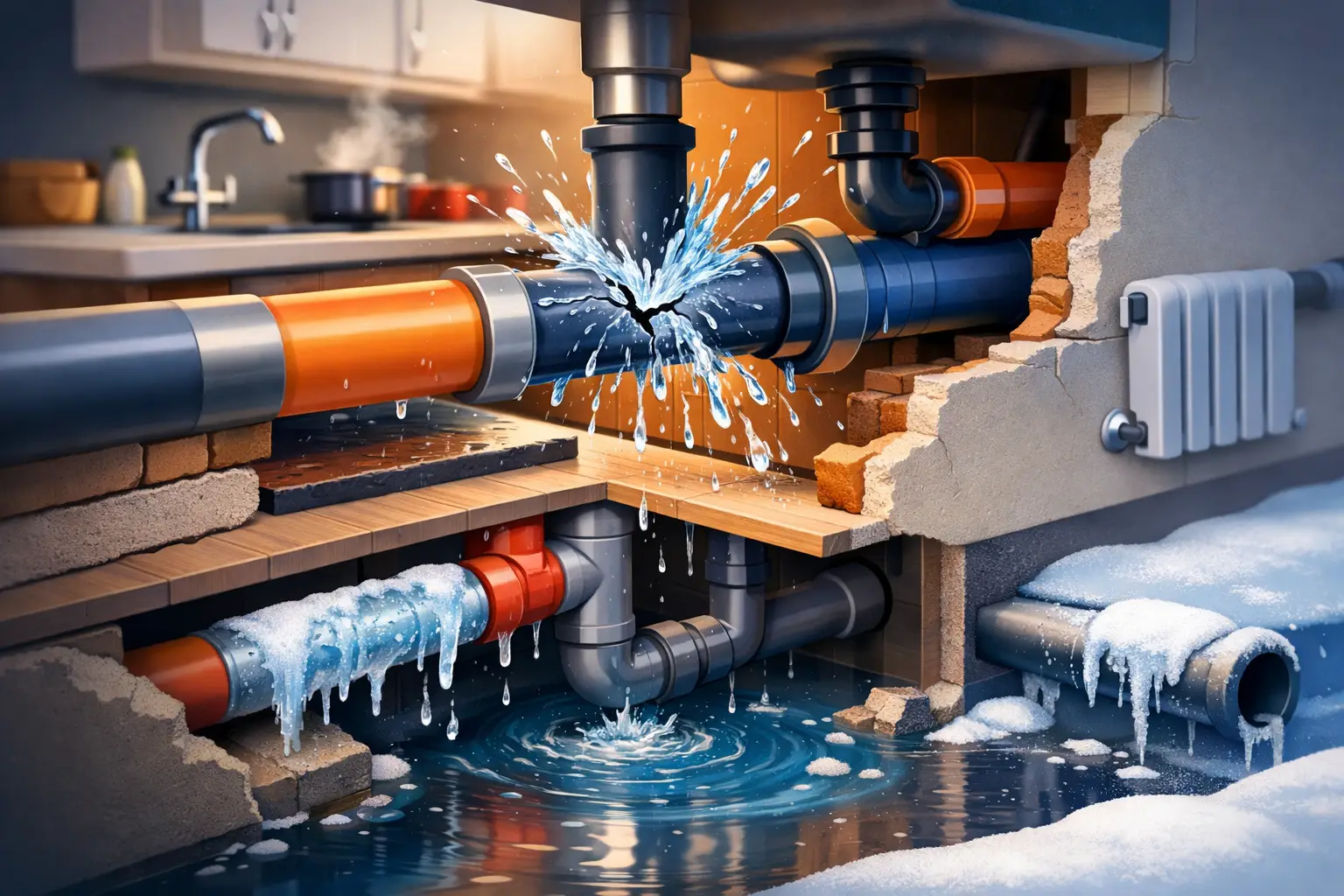
A burst pipe rarely starts as a dramatic event. More often, it begins with a small weakness inside the plumbing system – a section of pipe under stress, a hidden crack, or pressure building where it should not. If you are wondering what causes pipes to burst, the short answer is that pipes usually fail when material, temperature, pressure, or installation problems build up over time.
For homeowners in Massachusetts, that matters because burst pipes can quickly turn into soaked drywall, damaged flooring, mold concerns, and expensive cleanup. The good news is that most pipe failures leave warning signs, and many are preventable with the right maintenance and timely repairs.
What causes pipes to burst most often?
The most common cause is freezing, but it is not the only one. Pipes burst when water expands inside them, when corrosion eats away at the pipe wall, when pressure spikes strain the system, or when the pipe has already been weakened by age, poor installation, or repeated movement.
In real homes, it is often a combination of issues rather than one single cause. A pipe in an unheated wall may already have minor corrosion. Add a cold snap, and that same pipe becomes much more likely to fail. A water line with high pressure may hold up for years, then split at a weak joint once temperatures drop or a valve suddenly closes.
That is why a burst pipe should never be treated as bad luck alone. In many cases, there is an underlying condition that can be identified and corrected.
Frozen water is one of the biggest reasons pipes burst
When water freezes, it expands. That expansion creates pressure inside the pipe. Interestingly, the pipe does not always split exactly where the ice forms. The blockage caused by ice can trap water between the frozen section and a closed faucet, and pressure builds until the pipe wall or a fitting gives out.
This is especially common in exposed pipes, basement lines near drafty foundations, crawl spaces, garages, exterior walls, and areas with poor insulation. Even in homes with heat on, certain sections can get cold enough to freeze if there is a persistent draft or a lack of air circulation.
In this part of Massachusetts, frozen pipes are a seasonal concern, especially during extended cold periods. Homes with older insulation, additions, or plumbing routed through vulnerable spaces tend to be at higher risk.
Why the pipe may burst after the thaw
Many homeowners expect the pipe to break while it is frozen solid, but the real flooding often starts when the ice begins to melt. Once water flow returns, it escapes through the crack or split that formed under pressure. That is why a pipe can seem fine during a cold night and suddenly leak the next day.
Corrosion weakens pipes from the inside out
Another major answer to what causes pipes to burst is corrosion. Over time, metal pipes can deteriorate because of water chemistry, age, oxygen exposure, and mineral content. As the pipe wall thins, it becomes less able to handle everyday pressure.
Corrosion does not always announce itself clearly. Sometimes you see discolored water, recurring pinhole leaks, or staining around fittings. Other times, the pipe looks acceptable from the outside while the interior is significantly worn.
Older galvanized steel pipes are particularly vulnerable as they age. Copper can also develop pinhole leaks under certain water conditions. Once corrosion has progressed far enough, a pipe may crack or rupture under stress that a healthier pipe would easily handle.
Hard water and mineral buildup add stress
Minerals in the water can create buildup inside pipes, narrowing the pathway and increasing pressure in affected areas. That buildup does not always burst a pipe by itself, but it can contribute to uneven flow, pressure issues, and faster wear on the system.
In homes with recurring scale buildup, the plumbing system may be working harder than it should. That added strain matters most when the pipes are older or already compromised.
High water pressure can push weak pipes past their limit
Water pressure that feels great in the shower is not always good for the plumbing. If household water pressure is too high, it puts constant stress on pipes, valves, supply lines, and appliance connections.
Over time, that stress can expose weak joints and thin spots in the piping. A pressure spike can also happen suddenly when valves shut quickly or when there are changes in the municipal supply. In a well-built system, occasional fluctuations may not cause a problem. In an older or damaged system, they can be enough to trigger a burst.
Pressure problems are one of those issues that homeowners do not always notice until there is a failure. Banging pipes, noisy shutoffs, dripping fixtures, or repeated leaks can all point to pressure that should be checked.
Poor installation and cheap materials create weak points
Not every burst pipe is caused by age. Some failures happen because the pipe was never installed correctly in the first place. Bad connections, unsupported pipe runs, poorly soldered joints, improper routing, and mismatched materials can all create vulnerable spots.
A pipe that rubs against framing or shifts when water flows may slowly wear down. A joint installed under strain may hold for a while, then fail when temperature changes cause the materials to expand and contract. Even newer homes can have plumbing issues if shortcuts were taken during construction or remodeling.
This is one reason professional workmanship matters. A plumbing system is not just a group of pipes. It is a connected system where pressure, temperature, support, and material compatibility all play a role.
Clogs can create pressure where it should not exist
Drain clogs and supply line blockages affect plumbing differently, but either can contribute to pipe damage under the right conditions. In supply lines, a blockage can force pressure to build upstream. In drains, severe clogs can lead to backups, standing water, and stress on joints and older piping.
Clogs usually do not burst a healthy pipe on their own, but they can become a factor when combined with corrosion, freezing, or existing pipe damage. Homes with recurring slow drains or repeated backups should not ignore the problem.
Shifting, vibration, and physical damage matter too
Pipes are often hidden behind walls, above ceilings, and under floors, which makes it easy to forget they can be damaged by movement. Foundation settling, nearby construction vibration, repeated expansion and contraction, and accidental impact can all weaken a line over time.
Even small movement matters if it affects a joint or fitting. Washing machines, water heaters, and boilers can also create vibration in connected plumbing if components are loose or unsupported. Again, one movement event may not cause a burst, but repeated strain can shorten the life of the pipe.
Warning signs before a pipe bursts
Some pipe failures happen with little notice, but many give clues first. A sudden drop in water pressure, rust-colored water, damp drywall, musty smells, unexplained water stains, bulging ceilings, and recurring leaks are all worth taking seriously.
In winter, frost on exposed pipes, very low flow from a faucet, or unusual cold spots near plumbing lines may signal freezing risk. Noisy pipes, especially banging or rattling, can point to pressure or support issues.
The key is not to wait for visible flooding. A small warning sign is usually much cheaper to address than a burst pipe and water damage restoration.
How homeowners can reduce the risk
Preventing burst pipes starts with knowing where your vulnerable areas are. Pipes in attics, crawl spaces, exterior walls, garages, and unfinished basements deserve extra attention before and during winter.
Insulation helps, but it is not a cure-all. If a pipe is exposed to prolonged cold, insulation may only delay freezing. In some homes, the better fix is sealing drafts, improving heat distribution, or rerouting a problem section of pipe.
It also helps to keep water pressure within a safe range, repair small leaks promptly, and replace aging or corroded sections before they fail. If your home has older piping, recurring leaks, or signs of mineral buildup, a plumbing inspection can uncover issues that are easy to miss from the surface.
During freezing weather, leaving a faucet at a slow drip can help in certain situations, and opening sink cabinets can improve warm air circulation around pipes on exterior walls. Those steps can reduce risk, but they do not replace proper repairs when there is a known problem.
When to call a plumber
If a pipe has already burst, shut off the main water supply right away and call for emergency service. Fast action can greatly reduce damage to floors, walls, and belongings.
If you have not had a burst but have warning signs, it still makes sense to call before conditions worsen. A trusted local expert can check for corrosion, pressure problems, poor insulation, vulnerable pipe placement, and early leak activity. For homeowners in Hudson and nearby communities, Mass Plumbing & Heating sees these issues up close and knows how quickly a small plumbing weakness can become a much larger repair.
A home plumbing system does not need to be perfect to be reliable, but it does need attention when it starts showing signs of stress. Catching the cause early is usually the difference between a manageable repair and a long cleanup nobody wants to deal with.
Leave a Reply