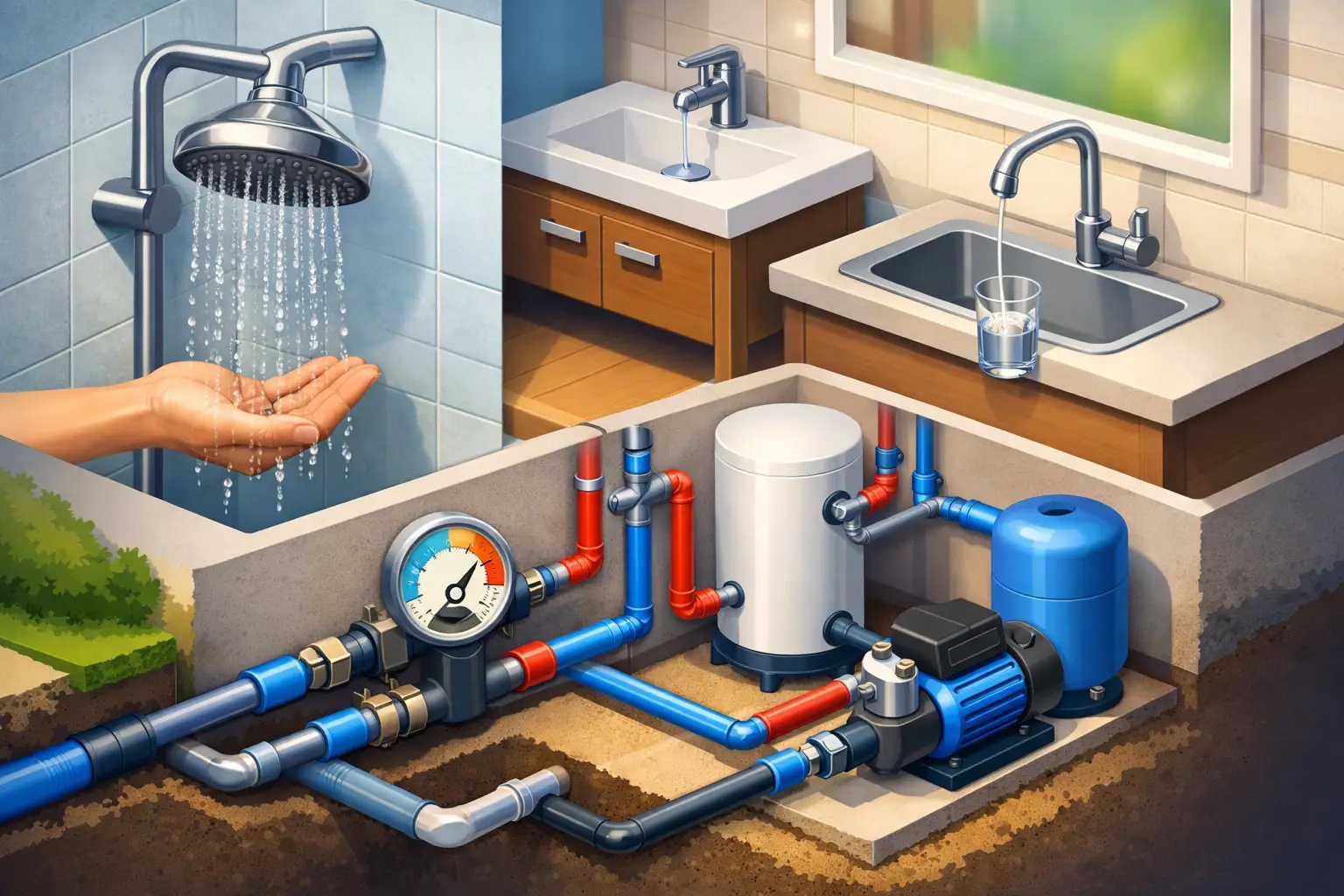
You notice it first in the shower. The spray feels weak, the washing machine takes longer to fill, and running two fixtures at once suddenly becomes a problem. Low water pressure in house plumbing is more than an annoyance – it can point to anything from a simple valve issue to a hidden leak or failing pipe.
The hard part is that poor pressure does not always have one obvious cause. In some homes, it starts gradually as mineral buildup narrows older pipes or fixture openings. In others, it shows up overnight because of a leak, a water main problem, or work being done nearby. The right fix depends on whether the issue affects one faucet, one bathroom, or the whole house.
What causes low water pressure in house plumbing?
When pressure drops throughout the home, the problem is often somewhere between the main water supply and the fixtures you use every day. A partially closed main shutoff valve is one of the simplest explanations. If the valve was moved during a repair and not fully reopened, water flow can stay restricted without anyone realizing it.
Pressure-reducing valves can also be part of the problem. Not every home has one, but when they fail, homeowners may see a sudden drop in pressure across multiple fixtures. In that case, adjusting fixtures or cleaning faucet parts will not solve much because the restriction is happening earlier in the system.
Pipe condition matters too, especially in older Massachusetts homes. Galvanized steel pipes can corrode internally over time, shrinking the path water has to travel through. Mineral scale can create similar problems in both pipes and fixtures, particularly if buildup has been accumulating for years. This kind of pressure loss usually gets worse gradually, not all at once.
Leaks are another major possibility. A hidden plumbing leak can redirect water before it reaches sinks, tubs, or appliances. Sometimes you will have clues such as water stains, damp drywall, a musty smell, or an unusually high water bill. Other times, the signs are subtle and the first thing you notice is weaker flow.
Then there are outside factors. Municipal water supply work, seasonal demand, a water main break, or neighborhood service interruptions can all affect pressure temporarily. If several nearby homes are having the same issue, your plumbing system may not be the only place to look.
Start by narrowing down where the pressure drop happens
Before assuming the worst, it helps to pay attention to patterns. If low pressure affects only one sink, one shower, or one appliance, the issue is often local. A clogged aerator, showerhead buildup, a faulty fixture cartridge, or a stop valve that is not fully open are all common and relatively contained problems.
If the problem affects one area of the house, such as an upstairs bathroom, the diagnosis gets a little broader. It could still be fixture-related, but branch line issues, partially closed valves, or developing pipe restrictions become more likely.
When the whole house has weak pressure, especially at both hot and cold fixtures, think bigger. That points more toward the main supply, pressure regulator, hidden leak, or aging piping. If only the hot water side has low pressure, the issue may involve the water heater, shutoff valves, or scale buildup in the hot water lines.
Timing matters too. Pressure that drops only during busy morning hours can suggest high demand in the house or on the municipal side. Pressure that stays low all day usually points to a persistent mechanical or plumbing issue.
A few things homeowners can check safely
There are a few practical checks that can help you understand the situation before scheduling service. Start with the main water shutoff valve and confirm it is fully open. If your home has a meter valve and a main shutoff, both should be checked carefully.
Next, remove and inspect a faucet aerator if the problem is limited to one sink. Sediment and mineral buildup can collect there and cut flow more than most people expect. Showerheads can do the same thing, especially in homes with hard water.
Look under sinks and behind toilets for fixture shutoff valves that may be partly closed. If work was done recently, this is worth checking. Also pay attention to whether low pressure affects both hot and cold water equally. That detail can save time when diagnosing the source.
What you should not do is start turning random valves, opening walls, or trying to adjust a pressure-reducing valve without knowing the current setting and condition. A quick DIY fix can turn into a larger repair if a brittle valve stem breaks or an existing issue gets worse.
Signs low water pressure may be a bigger plumbing problem
Sometimes low pressure is just buildup at a fixture. Other times, it is the early warning sign of something that should be addressed quickly.
A sudden pressure drop deserves attention, especially if it affects the entire home. That kind of change can mean a supply issue, a regulator failure, or a leak that started recently. If you also hear water running when no fixtures are on, see wet spots, or notice your water bill climbing, a hidden leak moves much higher on the list.
Discolored water paired with pressure problems can point to pipe corrosion or disturbance in the water line. Banging noises, sputtering faucets, or inconsistent flow may suggest air in the lines or a more complicated supply issue. If pressure has been poor for a long time in an older home, aging pipes may be restricting flow enough that repairs become less practical than replacement in certain sections.
There is also the comfort and appliance side of the equation. Low pressure can affect dishwashers, washing machines, tankless water heaters, and other equipment that depend on reliable water flow. So while weak pressure may seem like a minor inconvenience at first, it can create performance issues across the house.
Why older homes often have recurring pressure issues
In many older homes, low pressure is not one isolated defect. It is the result of a plumbing system that has been patched, extended, and repaired over decades. A newer faucet may be connected to older branch lines. One section of pipe may have been replaced while another remains narrowed by corrosion.
That mix can create inconsistent pressure from room to room. Homeowners sometimes replace fixtures hoping for a dramatic improvement, only to find the underlying restriction is still in the piping behind the walls. In those cases, the fixture is not really the problem – it is just where the symptoms show up.
This is also why one-size-fits-all advice can fall short. A newer home with a failed pressure regulator calls for a different solution than a century-old home with heavily scaled galvanized pipe. Both can feel like the same problem when you are standing in the shower, but the repair path is not the same.
When to call a plumber for low water pressure in house systems
If basic checks do not reveal an obvious fixture issue, it makes sense to bring in a professional. That is especially true when multiple fixtures are affected, the problem appeared suddenly, or there are signs of leakage, corrosion, or valve failure.
A plumber can test pressure, inspect valves, evaluate whether the issue is on the hot side, cold side, or both, and determine whether the source is local or system-wide. That matters because the most expensive repair is not always the right one, and the cheapest guess can waste time if the real problem is hidden deeper in the system.
For homeowners in Hudson and surrounding communities, this is the kind of issue where local experience helps. Homes in this area can vary widely in age and plumbing layout, and a dependable diagnosis is the fastest route to a lasting fix. Mass Plumbing & Heating handles troubleshooting, repair, and replacement work with that practical goal in mind.
If your water pressure has changed, trust what your house is telling you. Weak flow is not always urgent, but it is rarely random, and catching the cause early is usually easier than waiting for it to become a larger repair.
Leave a Reply