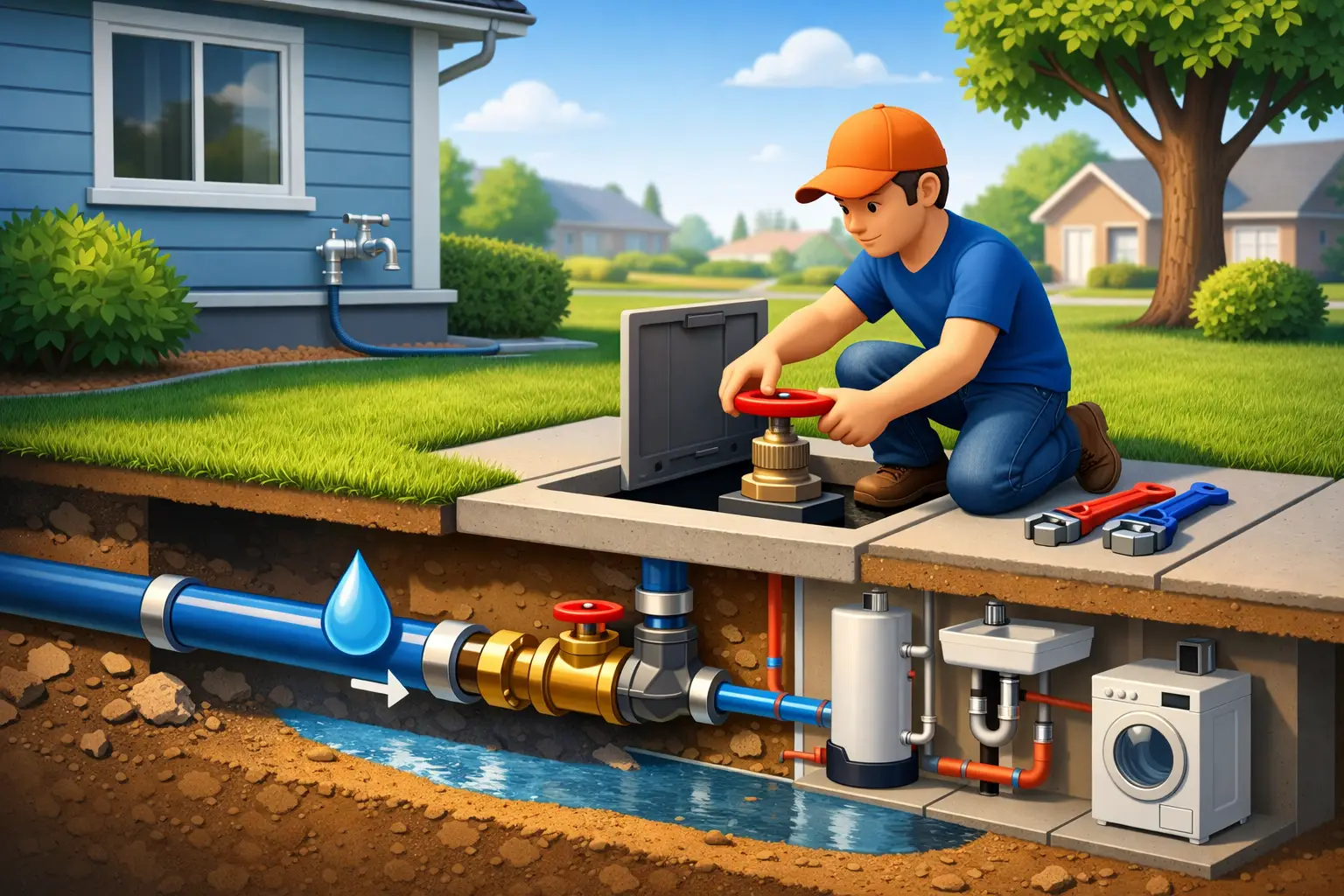
A burst washing machine hose can dump gallons of water into your home in minutes. In that moment, knowing exactly where your main water shutoff is matters a lot more than knowing where the mop is. This guide to home water shutoff is built for homeowners who want to be ready before a leak turns into floor damage, drywall repairs, and a long cleanup.
Most people do not think about the main shutoff valve until they need it fast. That is understandable. It usually sits quietly in a basement, utility room, crawl space, or near the water meter for years without getting much attention. But when a pipe lets go, a toilet supply line fails, or a water heater starts leaking heavily, shutting the water off quickly can limit damage and buy you time to make the right next call.
Why every homeowner needs a guide to home water shutoff
Your home plumbing system has one job – move clean water in and send wastewater out safely. When part of that system fails, the main water shutoff is your first line of defense. It stops the incoming water supply to the house so the problem does not keep feeding itself.
That does not mean every plumbing issue calls for shutting off the whole house. A dripping faucet or a toilet that runs constantly can often wait for a targeted repair. But active leaks, broken fixtures, overflowing toilets that will not stop, or any plumbing problem causing visible water spread are different. In those cases, the shutoff valve can prevent a bad situation from becoming a major one.
There is also a second reason to know your shutoff valve: planned work. If you are replacing a faucet, changing a washing machine hose, or having plumbing service done, knowing how to stop the water safely makes the job smoother and less stressful.
Where to find the main water shutoff
In many Massachusetts homes, the main water shutoff is located where the municipal water line enters the house. Often that means the basement, usually along a front wall, near the water meter, or close to the foundation. In slab homes or homes without basements, it may be in a utility closet, crawl space, garage, or near the water heater.
If your home has well water, the setup may be a little different. The main control point may be near the pressure tank or well equipment. The principle is the same, but the exact location can vary depending on the home and age of the system.
Older homes can be less predictable. Renovations, additions, and previous plumbing updates sometimes move piping routes or leave behind older valves that are no longer the best point of control. If you have more than one valve in the area where the water enters the home, it is worth confirming which one is the true main shutoff before an emergency happens.
A good habit is to physically locate the valve now, make sure everyone in the household knows where it is, and clear away boxes or storage that might block quick access.
What the valve usually looks like
Most main shutoff valves are either gate valves or ball valves. A gate valve usually has a round handle that you turn multiple times to close. A ball valve usually has a lever handle that turns a quarter turn. When the lever is parallel to the pipe, it is generally on. When it is perpendicular to the pipe, it is generally off.
Ball valves are often easier to operate and more reliable, especially in an emergency. Gate valves are common in older homes, but they can stick, wear out, or fail to close completely over time. That does not mean every older valve is a problem, but it does mean you should be careful with a valve that has not been touched in years.
If the shutoff looks corroded, heavily rusted, or damp around the stem, do not force it. A valve that breaks while you are trying to shut it can create a worse problem. In that case, it may be safer to call a professional and, if necessary, contact your water utility for help with the curb stop or exterior shutoff.
How to shut off the water safely
If there is active leaking, move quickly but do not panic. Go straight to the main shutoff valve and turn it off. With a gate valve, turn clockwise until it stops. With a ball valve, rotate the lever a quarter turn until it is perpendicular to the pipe.
Once the main water is off, open a faucet at the lowest level of the home and another at a higher level if possible. This helps relieve pressure and drains some of the water remaining in the lines. If the leak involves hot water equipment, use caution because the water may be very hot.
If the issue is isolated to one fixture, you may not need to shut off the whole house. Toilets, sinks, and some appliances usually have local shutoff valves nearby. Turning off the fixture-level valve keeps the rest of the house usable. Still, if that smaller valve does not work or the leak is larger than expected, go to the main shutoff right away.
When shutting off the water is the right move
A practical guide to home water shutoff should be clear about urgency. Shut off the main water right away if a pipe has burst, a supply line has split, a fixture has broken off, or water is spreading across floors, ceilings, or walls. If a water heater tank is leaking heavily from the tank body, the cold-water supply to the heater should be turned off, and in some cases the main should also be shut down until the situation is assessed.
For slower leaks, it depends. A small drip under a sink may only need the local stop valve turned off. A toilet that keeps filling may be controlled at the toilet valve. But if you are not sure where the leak is coming from, if water is near electrical equipment, or if the local valve will not close, shutting off the whole house is the safer choice.
Winter adds another layer. Frozen pipes can crack and then leak when they thaw. If you suspect a frozen pipe has already split, be ready to shut off the water before full flow returns.
Common problems homeowners run into
The biggest issue is simple: people cannot find the shutoff when they need it. The second is a valve that has seized from age or corrosion. The third is confusion over whether to use a local shutoff, the main house valve, or the water company curb stop outside.
The curb stop is not usually a homeowner DIY valve. It often requires a special tool and may be owned or controlled by the municipality or utility. If the indoor main will not close and you have active water damage, you may need emergency plumbing help and utility assistance.
Another common problem is partial shutoff. A worn valve may reduce the flow without fully stopping it. That can mislead homeowners into thinking the system is safe to work on when it is not. If water still runs steadily after the valve is supposedly off, stop and get professional help.
A little preparation goes a long way
The best time to learn your shutoff is before you need it. Take a few minutes to find it, test access to it, and identify whether it is a gate valve or ball valve. If the valve looks questionable, schedule an inspection. Replacing a weak main shutoff is much easier on a calm weekday than during a flooded-night emergency.
It also helps to label the valve clearly and keep a flashlight nearby if the basement lighting is limited. In households with older parents, teens, or anyone who may be home alone, show them where the shutoff is and how it works. In an emergency, that kind of preparation can save real money and stress.
If you are already planning plumbing work, ask the technician to evaluate the main shutoff while they are there. A dependable local contractor like Mass Plumbing & Heating can tell you whether the valve is operating properly, whether replacement makes sense, and whether there are other shutoffs in the home you should know about.
When to call a plumber instead of handling it yourself
Shutting off the water is often a homeowner task. Repairing what comes next is not always one. If the valve will not move, leaks around the valve stem, only partly closes, or seems damaged, call a plumber. If a leak involves a hidden pipe in a wall or ceiling, a water heater, or any situation where the source is unclear, professional diagnosis matters.
The same goes for repeat leaks, low water pressure after operating the valve, or signs that older plumbing materials may be failing. A quick response can limit damage, but a proper repair is what keeps the problem from coming back.
A home feels a lot less overwhelming when you know where the water stops. That one piece of knowledge gives you control in a stressful moment, and that is something every homeowner should have.
Leave a Reply