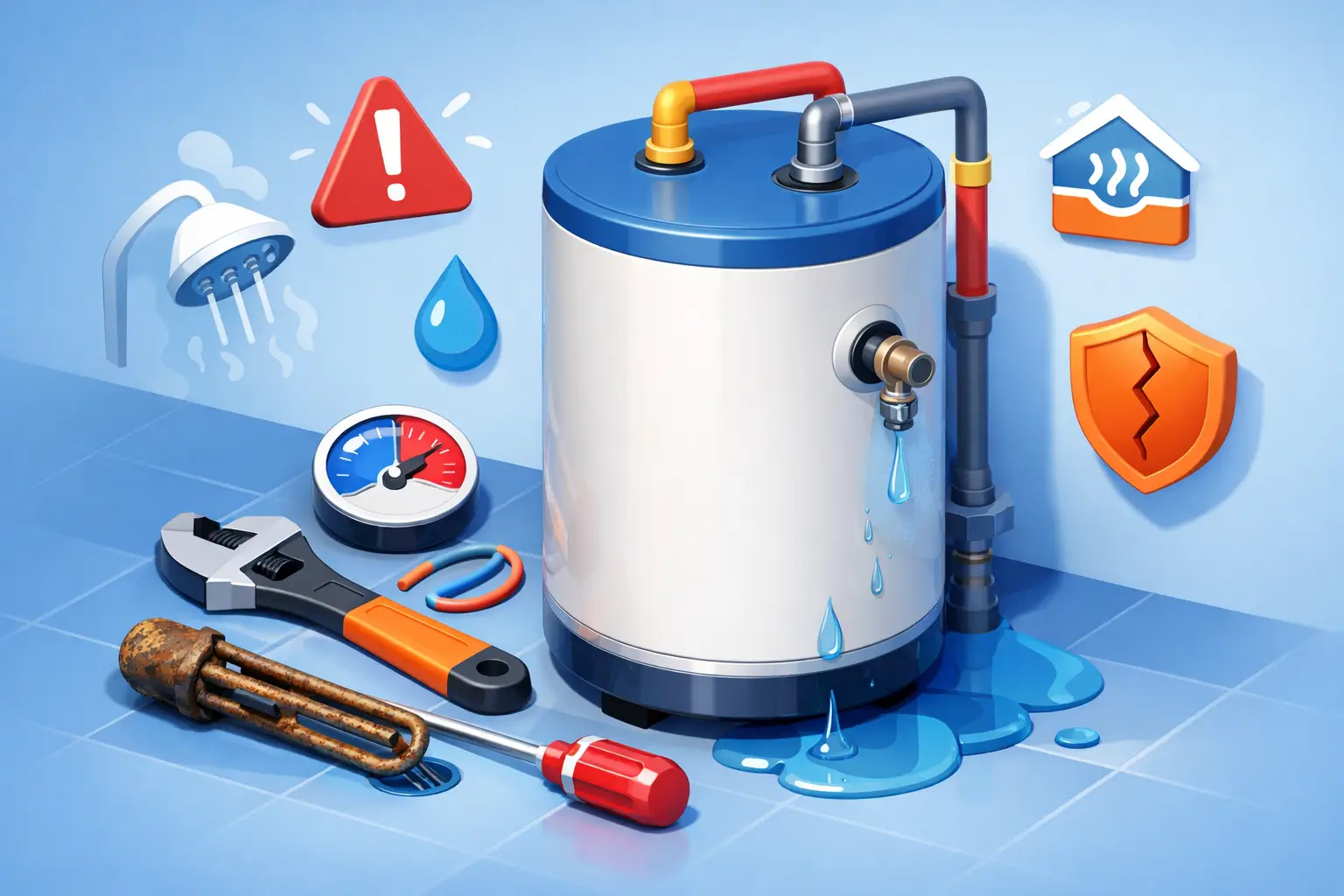
No hot water at 6 a.m. tends to turn an ordinary morning into a household problem fast. When your shower runs cold, your utility room smells off, or you notice water around the tank, water heater repair moves from a chore you can put off to something that needs attention now.
For homeowners in Hudson and nearby Massachusetts communities, the challenge is not just getting hot water back. It is figuring out whether the issue is minor, whether the unit is safe to keep running, and whether a repair still makes sense compared to replacement. A good diagnosis matters because the right fix depends on the type of water heater, its age, and the symptom you are seeing.
When water heater repair should not wait
Some water heater issues are inconvenient. Others can damage your home or create a safety concern. If you have active leaking around the tank, a burning smell, discolored water with a strong metallic odor, or a gas unit that will not stay lit, it is smart to treat the problem as urgent.
A leaking connection or valve may be repairable. A leaking tank usually is not. That distinction is important because many homeowners see water on the floor and assume the whole unit has failed. Sometimes the source is a loose fitting, the temperature and pressure relief valve, or condensation. Other times the tank itself has rusted through, and no repair will make that a dependable long-term solution.
If you suspect a gas smell near the water heater, leave the area and arrange for professional help right away. That is not a wait-and-see situation.
Common signs your water heater needs repair
Most water heaters give some warning before they stop working completely. The signs are often subtle at first, then more obvious over time.
Inconsistent or no hot water
If your hot water runs out much faster than it used to, a failing heating element, burner problem, thermostat issue, or sediment buildup could be reducing performance. On a tankless unit, scale buildup or ignition trouble may be the cause. If there is no hot water at all, the problem may be electrical, gas-related, or tied to a failed control component.
Strange noises from the tank
Popping, rumbling, or banging sounds usually point to sediment collecting at the bottom of a tank-style water heater. As water heats beneath that layer, the unit works harder and less efficiently. In some cases, a flush helps. In others, the sediment has been there long enough to contribute to overheating and internal wear.
Rust-colored water
Brown or reddish hot water can signal corrosion inside the tank or deterioration of the anode rod, which is designed to protect the tank from rusting. If discoloration only shows up when running hot water, the water heater is a likely suspect. If it appears on both hot and cold sides, the plumbing system may be part of the issue.
Water around the unit
Even a small amount of water matters. It may come from fittings, valves, the drain connection, or the tank itself. The cause determines whether water heater repair is straightforward or whether replacement is the wiser move.
Rising energy bills
A struggling water heater often uses more fuel or electricity to do the same job. Sediment, worn parts, and poor combustion can all reduce efficiency. Homeowners sometimes notice the utility bill before they notice the mechanical symptom.
What causes water heater problems
Water heaters work hard every day, and most of their problems come from wear, water quality, and lack of maintenance.
Sediment is one of the biggest issues in tank-style systems. Minerals settle at the bottom over time, especially in areas with hard water. That buildup reduces efficiency, shortens recovery time, and can eventually damage the tank.
Parts also wear out. Electric units may need new elements or thermostats. Gas units can develop issues with pilot assemblies, thermocouples, gas control valves, or burners. Pressure relief valves, expansion tanks, and shutoff valves can fail too.
Age plays a role as well. A water heater that is ten or twelve years old is simply more likely to have multiple components nearing the end of their service life. At that point, even a successful repair may only buy limited time.
Repair or replace? It depends on the unit
This is usually the question homeowners want answered first, and the honest answer is that it depends.
If the issue is isolated to a replaceable part and the tank is still in good shape, repair often makes sense. That is especially true for newer units with a solid service history. Replacing a heating element, thermostat, igniter, or valve can restore dependable performance without the cost of a full replacement.
If the tank is leaking, the unit is badly corroded, or the repair cost is high compared to the age of the system, replacement is often the better investment. Continuing to repair an older unit can become more expensive than upgrading to a newer, more efficient model.
Tankless water heaters follow a slightly different calculation. They usually last longer than standard tank systems, so repairs are often worth considering if the heat exchanger is still sound and the issue is tied to maintenance or serviceable components.
Types of water heaters and how repair differs
Not all water heaters fail the same way, which is why a broad diagnosis matters.
Tank water heaters
These are the most common in many homes and often have issues tied to sediment, thermostats, elements, burners, or aging tanks. Repairs are usually straightforward when caught early.
Tankless water heaters
Tankless systems can offer strong efficiency, but they need proper maintenance. Scale buildup, sensor problems, ignition faults, and venting issues are common service calls. These units benefit from technicians who understand both plumbing and combustion systems.
Hybrid water heaters
Hybrid systems can lower operating costs, but they involve more components than a standard tank unit. If something goes wrong, the repair may involve controls, heat pump operation, airflow, or traditional backup heating elements.
What you can check before calling
There are a few basic things homeowners can safely look at. For an electric unit, check whether the breaker has tripped. For a gas unit, see whether the pilot is out if your model has one and review any visible status light or error code. You can also check the thermostat setting and confirm that a shutoff valve has not been closed accidentally.
That said, water heater repair is not a good area for guesswork. If there is leaking, gas-related trouble, electrical concerns, or repeated shutdowns, it is time for professional service. A water heater combines water, power or fuel, pressure, and heat in one appliance. The risk of making the problem worse is real.
Why prompt service usually saves money
Putting off repair often turns a manageable issue into a bigger one. A minor leak can damage floors or walls. Sediment buildup can shorten equipment life. A burner or element problem can leave the system running inefficiently for weeks or months.
Fast service also helps preserve options. If a technician catches the issue before the tank fails or before major corrosion sets in, repair may still be practical. Waiting too long can take that option off the table.
For local homeowners, this is where working with an experienced plumbing and heating contractor makes a difference. A team that understands tank, tankless, gas, electric, and high-efficiency systems can tell you clearly whether the right next step is a repair, a maintenance service, or a replacement. That kind of straightforward guidance is what many families are looking for when hot water suddenly becomes unreliable.
Preventing future water heater repair calls
No water heater lasts forever, but regular maintenance can help you get more dependable years from it. Flushing a tank, checking the anode rod, testing safety components, and addressing small performance changes early can all reduce the chance of a sudden breakdown.
Tankless units should be descaled on a schedule that fits your water conditions and usage. Homes with harder water may need more frequent service. If your system has already needed one scale-related repair, that is a sign maintenance should become more routine.
It also helps to pay attention to small changes. If the water takes longer to heat, the tank starts making new noises, or hot water quality changes, those are useful early signals. Problems tend to be cheaper and simpler when they are handled before they become emergencies.
When your water heater starts acting up, the goal is not just to get through one more day with lukewarm showers. It is to protect your home, restore reliable hot water, and make a smart decision about the system you depend on every day. If something feels off, trust that instinct and get it checked before a minor issue becomes a bigger one.
Leave a Reply