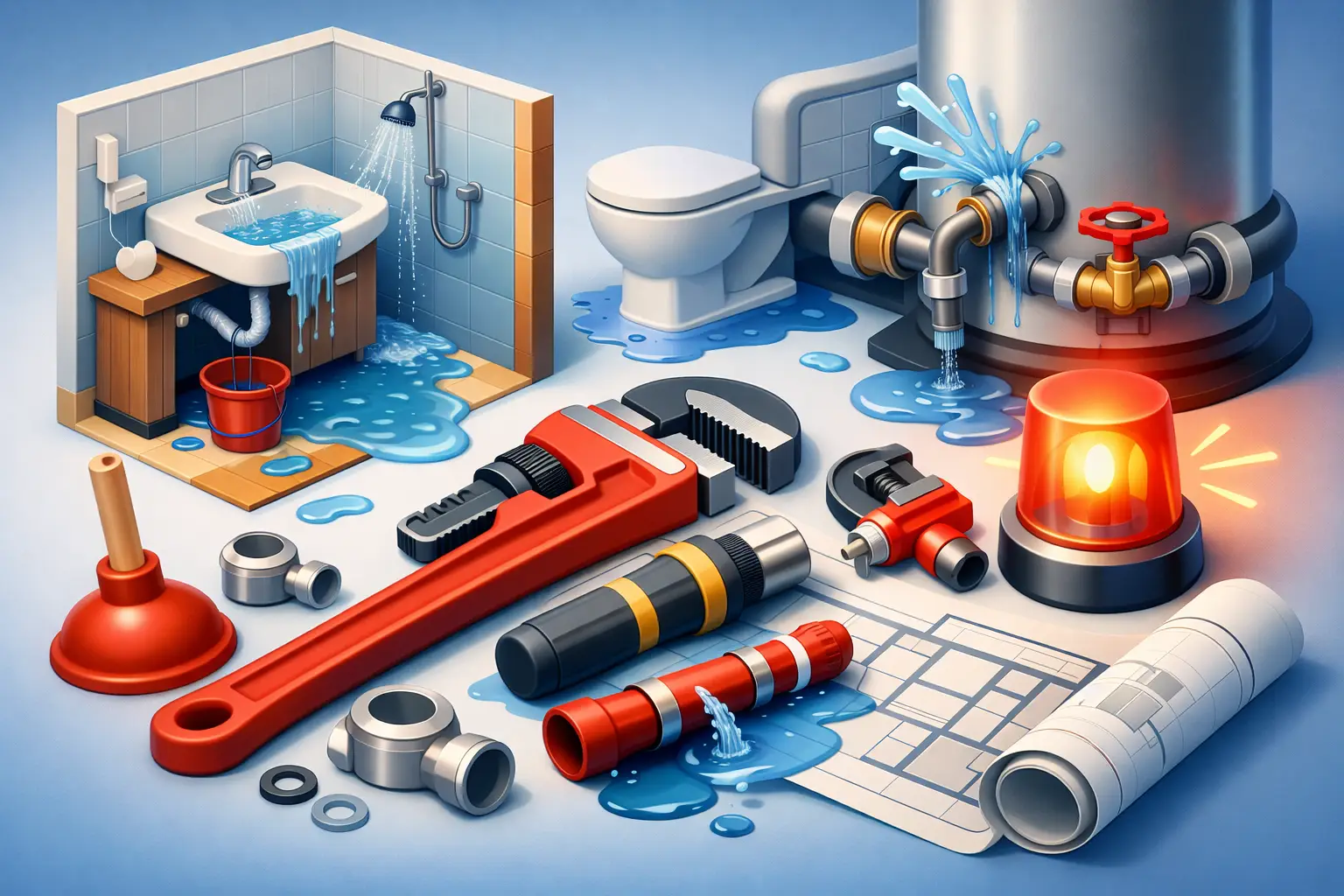
A pipe can go from fine to failed in a matter of minutes. When water is spreading across a floor, backing up into a tub, or pouring through a ceiling, panic makes everything harder. This homeowner guide to plumbing emergencies is built to help you stay calm, protect your home, and know when it is time to call for professional help.
Most plumbing emergencies follow the same pattern. First, there is immediate damage control. Then there is a short window to limit water damage, protect your family, and avoid making the problem worse. What you do in those first few minutes matters more than most homeowners realize.
What counts as a plumbing emergency?
Not every plumbing problem needs a middle-of-the-night service call, but some absolutely do. A dripping faucet is frustrating, yet it usually can wait. A burst pipe, sewage backup, overflowing toilet that will not stop, no water in the house, or basement flooding from a failed sump pump is different.
A good rule is simple: if the problem is actively damaging your home, creating a health risk, or preventing essential plumbing from working safely, treat it as an emergency. In winter, a frozen pipe also deserves quick attention because it can split without much warning. If a plumbing issue involves gas lines, leave the area and contact the proper emergency service right away.
The first five minutes in a plumbing emergency
The fastest way to reduce damage is to stop the water source if you can do it safely. Every homeowner should know where the main water shutoff is located before there is a problem. In many Massachusetts homes, it is near where the water line enters the basement, crawl space, or utility area.
If the emergency is isolated to one fixture, such as a toilet or sink, the local shutoff valve may be enough. Turning off only that fixture keeps the rest of the house usable. If the valve is stuck, leaking, or missing, shut off the main water supply instead.
Next, turn off electricity to affected areas if water is near outlets, appliances, or your electrical panel. Do not step into standing water to reach a breaker. If there is any doubt about safety, wait for qualified help. Move rugs, boxes, towels, and furniture away from the water path if you can do so quickly.
After that, contain what you can. Buckets, towels, and mops will not solve the problem, but they can limit damage while you wait for service. Take a few photos too. If you need repairs beyond plumbing, having documentation can help later.
A homeowner guide to plumbing emergencies by problem type
Burst pipes and sudden leaks
A burst pipe is one of the most urgent home plumbing problems because it can release a huge amount of water very quickly. Shut off the main water supply immediately. Then open a faucet at the lowest level of the home to help drain the remaining water from the system.
If the leak is small and coming from a visible pipe joint, some homeowners try temporary measures like a pipe clamp, repair tape, or a bucket underneath. That can buy time, but it is not a fix. Water pressure, corrosion, freezing damage, or poor connections all need proper diagnosis. A repaired spot may hold briefly and fail again if the underlying pipe is compromised.
In older homes, one leak can also point to broader wear in the plumbing system. That does not always mean a whole-house repipe is needed, but it does mean the repair should be evaluated in context.
Overflowing toilets and drain backups
If a toilet is rising toward the rim, remove the tank lid and push the flapper closed if it is stuck open. Then shut off the toilet supply valve behind the fixture. Do not keep flushing to “see if it clears.” That usually makes the cleanup worse.
A plunger can help with a basic toilet clog, but there is a limit. If multiple drains are backing up, if sewage is coming up in the tub or basement drain, or if the toilet overflows even without flushing, the issue may be deeper in the main sewer line. That is not a job for chemical drain cleaner.
Store-bought drain products are one of the most common mistakes homeowners make during emergencies. They rarely solve serious clogs, and they can damage pipes, create fumes, and make later repairs more hazardous for whoever has to work on the system.
Water heater failures
No hot water is disruptive. Water around the water heater is more urgent. If you see leaking at the tank, hear loud popping or hissing, or notice rusty water and reduced hot water output, turn off the unit and the water supply if you can.
For electric water heaters, shut off power at the breaker. For gas units, do not attempt repairs beyond basic shutoff steps unless you are trained to do so. A failed water heater may be repairable, but age matters. If the tank is older and leaking from the body of the unit, replacement is often the more practical path.
This is one area where homeowners benefit from working with a contractor who understands both emergency repairs and replacement options. A quick repair on a failing system is not always the most cost-effective decision.
Sump pump problems and basement flooding
A sump pump failure often shows up during the worst possible weather. If the pit is full and the pump is not turning on, check the power source first. A tripped breaker, unplugged cord, or stuck float switch may be the issue. If the pump hums but does not move water, or if it cycles without clearing the pit, it may have failed mechanically.
Basement flooding is especially time-sensitive because it affects flooring, stored belongings, framing, and air quality. If stormwater is involved, the situation can escalate quickly. Backup sump systems and battery backups are worth considering after the emergency passes, especially in homes with a history of water intrusion.
Frozen pipes
Frozen pipes are common in New England winters, especially in unheated spaces or along exterior walls. If a faucet stops producing water or only trickles during a cold snap, a frozen section may be blocking the line. Shut off the main water if you suspect the pipe has cracked.
You can gently warm accessible pipe sections with room heat or warm towels, but never use an open flame. The challenge is that the frozen spot is not always visible, and thawing one section does not help if another part of the line has already split. Fast professional attention can prevent a frozen pipe from becoming a burst-pipe cleanup.
What not to do during plumbing emergencies
A calm response includes knowing when to stop. Do not tear into walls, force stuck valves, or rely on internet tricks that promise instant fixes. Plumbing systems are connected, and a rushed move in one spot can create a bigger issue elsewhere.
Avoid running other fixtures if you suspect a drain or sewer blockage. Do not use appliances connected to water lines if a leak may involve those connections. And if water is near a boiler, water heater, or any powered equipment, treat electrical safety as the first priority.
How to be ready before the next emergency
The best emergency response starts before anything goes wrong. Know the location of your main water shutoff and test that it turns properly. Find the individual shutoffs under sinks and behind toilets. If a valve is seized or leaking, have it replaced before you need it.
It also helps to keep a few basic items on hand: a plunger, towels, a bucket, a flashlight, and the phone number of a trusted local plumbing and heating company that offers emergency service. If your home has a sump pump, test it periodically. If your water heater is nearing the end of its expected life, pay attention to warning signs instead of waiting for a leak.
For many homeowners in Hudson and surrounding communities, plumbing emergencies overlap with heating concerns, especially in winter. Frozen pipes, boiler issues, and water heater failures can all affect daily comfort and home safety at the same time. That is one reason many local families prefer to work with one reliable company that can handle both plumbing and heating systems. Mass Plumbing & Heating is built around exactly that kind of practical support.
When it is time to call right away
If you cannot stop the water, if sewage is involved, if there is flooding near electrical equipment, or if a water heater, boiler, or sump pump failure is affecting the safety of the home, do not wait. Emergency service exists for a reason.
A good service call should do more than stop the immediate problem. It should identify what failed, explain your options clearly, and help you understand whether the repair is likely to hold or whether a replacement makes more sense. That kind of guidance matters when you are making decisions under stress.
Plumbing emergencies are never convenient, but they are easier to manage when you know your first steps. The goal is not to fix everything yourself. It is to protect your home, avoid preventable damage, and get the right help involved quickly so one bad moment does not turn into a much bigger repair.
Leave a Reply