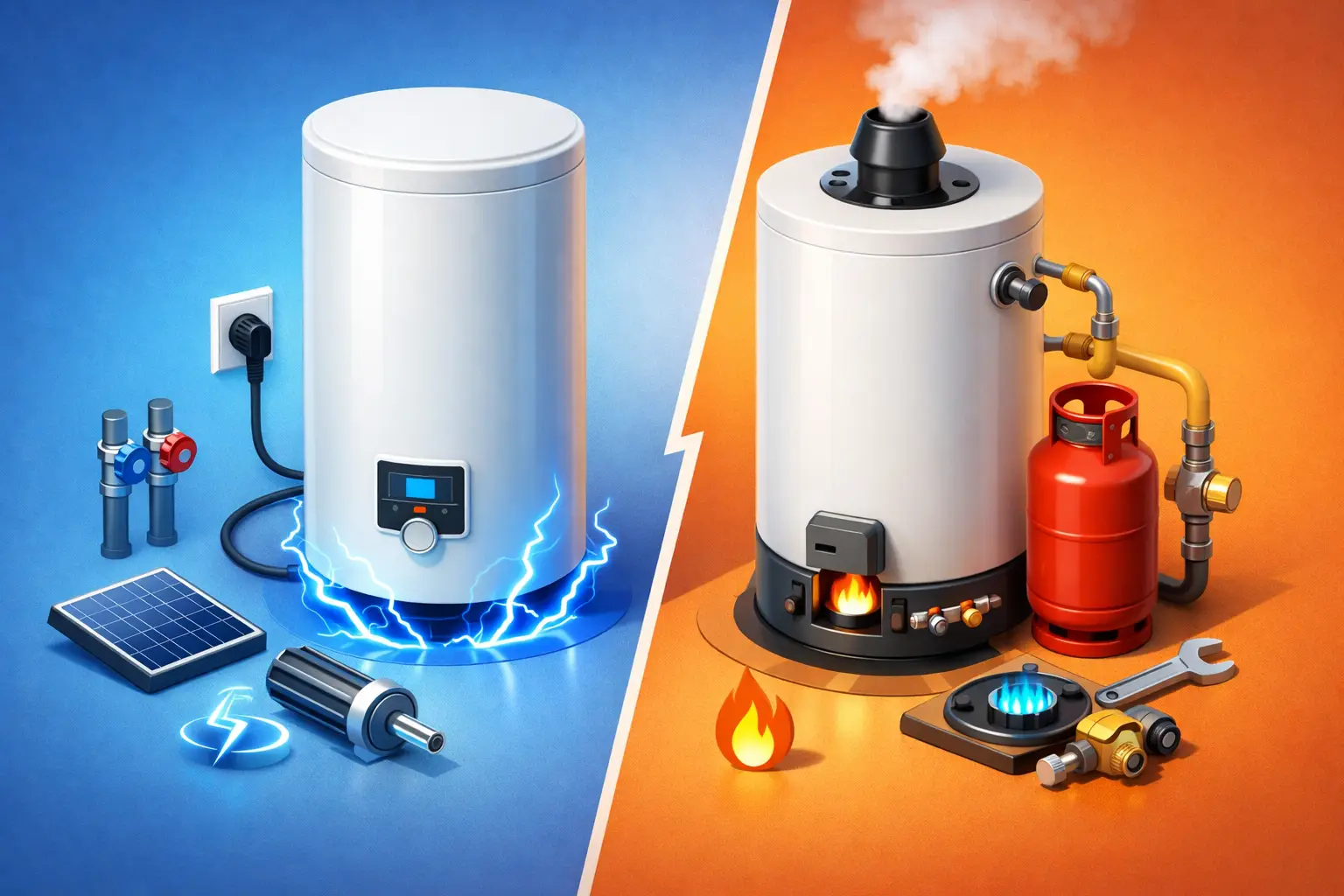
When your hot water runs out halfway through the second shower, the question gets real fast: electric vs gas water heater – which one actually makes more sense for your home? For homeowners in Hudson and surrounding Massachusetts communities, the right answer usually comes down to fuel access, venting, installation conditions, and how your household uses hot water day to day.
Electric vs gas water heater: the main difference
At the simplest level, an electric water heater uses heating elements powered by your home’s electrical system, while a gas water heater burns natural gas or propane to heat the tank. Both can deliver dependable hot water. The difference is how they do it, what they cost to operate, and what your home needs to support them.
Gas models usually heat water faster. That matters for larger families, homes with multiple bathrooms, or anyone tired of spacing out showers and laundry. Electric models are often simpler to install because they do not need gas piping or venting, which can make them a practical fit in homes where those connections are not available or would be expensive to add.
If you are replacing an existing unit, the easiest path is often staying with the same fuel type. But not always. Sometimes a switch makes sense, especially during a renovation, fuel conversion, or when long-term operating costs matter more than upfront simplicity.
Upfront cost vs long-term cost
This is where many homeowners get stuck. A gas water heater often costs more to install, especially if venting, gas line upgrades, or code changes are needed. An electric model usually has a lower installation barrier. In a straightforward replacement, that can make electric look like the better deal.
But monthly utility costs can tell a different story. In many areas, gas is less expensive than electricity for water heating, so a gas unit may cost less to run over time. The exact difference depends on local utility rates, your usage, and the efficiency of the model you choose.
That is why the cheapest option on day one is not always the least expensive option over the life of the heater. A homeowner planning to stay put for years may care more about operating cost. Someone replacing a failed unit in an emergency may care more about getting hot water back quickly with the least disruption.
Performance in busy households
For larger households, recovery rate matters. Recovery rate is how quickly the water heater can bring a tank of water back up to temperature after hot water is used. Gas water heaters generally recover faster than standard electric tank models.
That faster recovery can make a noticeable difference in homes with back-to-back showers, dishwashing, and laundry happening in the same morning. If your family regularly pushes the limits of a standard tank, gas often has the edge.
Electric tank water heaters can still work well, especially in smaller households or homes with steadier, lighter usage. They tend to be predictable and dependable. But if your common complaint is running out of hot water, a standard electric tank may not solve that issue unless the tank size changes too.
Installation needs inside the home
This is one of the biggest practical differences in an electric vs gas water heater decision.
An electric unit needs adequate electrical service and the proper circuit. A gas unit needs a gas supply and safe venting for combustion gases. That venting requirement can add complexity, especially in older homes or tight mechanical spaces.
Gas installations also require attention to combustion air, flue condition, gas shutoffs, and code compliance. None of that is a reason to avoid gas. It just means the installation matters a lot. A poorly installed gas unit can create performance and safety problems that have nothing to do with the heater itself.
Electric models avoid combustion and venting issues, which is one reason they are often considered simpler. In certain basements, additions, or homes without existing gas service, that simplicity may be the deciding factor.
Safety considerations homeowners should know
Both types can be safe when properly installed and maintained, but the risks are different.
Gas water heaters involve open flame and combustion. That means proper venting and gas connections are critical. Any gas-burning appliance should be installed and serviced by qualified professionals who understand airflow, drafting, and leak prevention. Carbon monoxide safety is part of that conversation.
Electric water heaters do not have combustion risks, but they still must be wired correctly and protected appropriately. Faulty electrical work, failed thermostats, or aging components can still create problems.
For most homeowners, this is less about choosing the “safer” technology in a vacuum and more about making sure the unit is sized, installed, and maintained correctly for the house.
Energy efficiency and newer options
Standard electric resistance water heaters are often efficient at the point of use because much of the electricity goes directly into heating the water. But electricity itself can be expensive, which affects the monthly bill.
Gas water heaters can be cost-effective to operate, and newer high-efficiency models can improve performance further. Still, not every home needs or benefits from the most advanced system on the market. The right fit depends on your budget, usage, and installation conditions.
There is also an important middle ground that homeowners sometimes overlook: the hybrid electric heat pump water heater. These units use less electricity than standard electric tanks and can be a strong option for homeowners focused on efficiency. They do require the right space and conditions to perform well, so they are not ideal everywhere.
That is one reason a one-size-fits-all recommendation does not work. A basement in Massachusetts may support one type of system beautifully and make another one less practical.
What makes sense in Massachusetts homes
In this area, older homes often come with installation quirks. Basement layouts, chimney conditions, existing gas piping, electrical panel capacity, and overall heating setup can all affect the best choice.
If your home already has natural gas and other gas appliances, staying with gas may be the most practical path. If your home is all-electric or your gas setup would require major work, electric may be the cleaner choice. If energy savings are a top priority and your home has the right conditions, a hybrid model may deserve serious consideration.
Seasonal demand matters too. During cold-weather months, homeowners are already thinking about boilers, heating systems, and fuel use. Sometimes water heater replacement happens alongside broader upgrades, and that can change the math. If you are already making changes to gas service or converting other equipment, a gas water heater may fit naturally into the plan.
When to switch fuel types
Most homeowners do not need to switch from electric to gas or gas to electric just for the sake of switching. It usually makes sense only when there is a clear benefit.
A switch may be worth considering if your current setup cannot keep up with demand, if utility costs are pushing you toward a different fuel, or if another project is already opening the door to easier installation. On the other hand, if your existing setup has worked well and replacement can be done quickly with minimal changes, staying with the same fuel often keeps the project simpler and more affordable.
This is where an in-home evaluation matters. Two houses on the same street can have very different answers because the systems around the heater are different.
A practical way to decide
If you are weighing electric vs gas water heater options, start with four questions. First, what fuel sources are already available in the home? Second, does your household regularly use a lot of hot water in a short time? Third, are you focused more on lower installation cost or lower long-term operating cost? Fourth, are there space, venting, or electrical limitations that narrow the options?
Once those answers are clear, the decision usually gets easier. Homeowners who want simpler installation and do not have gas available often lean electric. Homeowners who want stronger recovery and lower operating costs often lean gas. Homeowners who want high efficiency may want to look at hybrid systems if the space allows.
At Mass Plumbing & Heating, this is the kind of decision we help homeowners make every day – not with a sales pitch, but with a realistic look at the house, the budget, and how the system will perform over time.
The best water heater is not the one with the most features on paper. It is the one that gives your household reliable hot water, fits your home safely, and does not leave you regretting the choice a year from now.
Leave a Reply