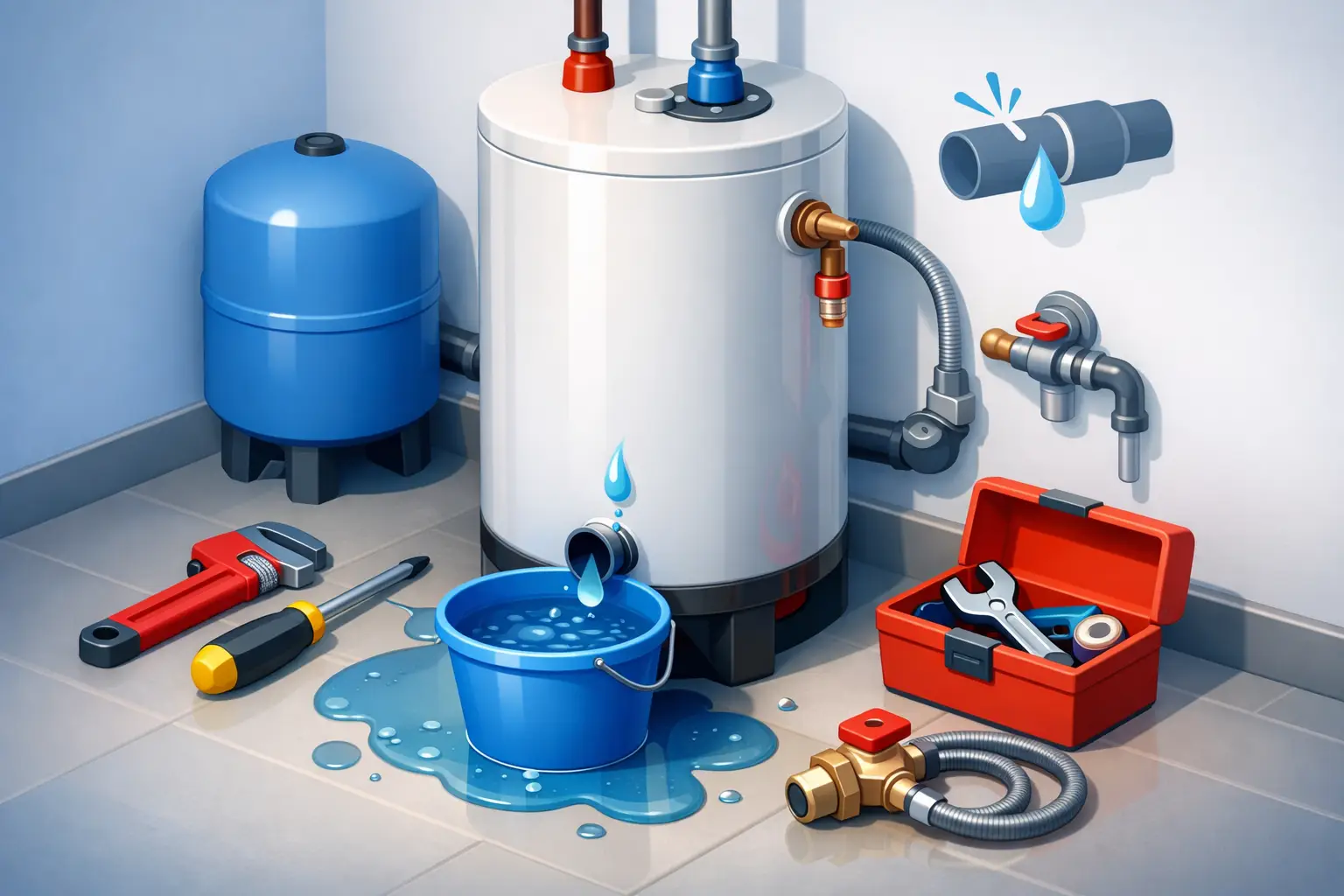
A puddle around the water heater usually shows up at the worst possible time – early in the morning, right before guests arrive, or when you are already dealing with another home repair. If you are searching for leaking water heater repair, the first priority is simple: protect your home from damage and figure out whether the leak is minor, urgent, or a sign the unit needs to be replaced.
Water heaters can leak for several different reasons, and the cause matters. In some cases, the problem is a loose connection or a failing valve. In others, the tank itself has started to corrode, and no repair will stop it for long. Knowing the difference can save you time, money, and a flooded basement.
Leaking water heater repair starts with the source
Before anyone talks about repair options, it helps to confirm where the water is actually coming from. Homeowners are often surprised to learn that not every puddle near a water heater means the tank is leaking.
Condensation can collect on the outside of the unit, especially during humid weather or when a cold-water line cools the surrounding metal. Water can also travel from nearby plumbing, a venting issue, or even an appliance close to the heater. A slow drip from a pipe above the tank may leave the same wet floor as a failing heater.
If you can safely inspect the area, dry the floor and the outside of the tank, then watch for where fresh water appears. Look around the top fittings, the shutoff valve, the cold and hot connections, the drain valve near the bottom, and the temperature and pressure relief valve. If water seems to bead up from the body of the tank itself, that is usually the most serious scenario.
What homeowners can do right away
When a water heater is actively leaking, a few quick steps can limit damage before a plumber arrives. Start by turning off the power or fuel source if you know how to do it safely. For an electric water heater, switch off the breaker. For a gas unit, turn the gas control to the appropriate setting only if you are familiar with the unit and do not smell gas.
Next, shut off the cold-water supply to the heater. Most units have a valve on the incoming water line above the tank. This can stop additional water from feeding the leak. If water is spreading on the floor, use towels or a wet vacuum if available, and move any stored items away from the area.
That said, there is a limit to safe DIY troubleshooting. If the leak is heavy, if you see rust, if the tank is bulging, or if the area includes electrical hazards, it is time to stop inspecting and call for professional help.
Common causes of a leaking water heater
Some leaks are repairable. Others mean the unit has reached the end of its useful life. Here are the most common causes plumbers see in residential homes.
Loose or worn pipe connections
The top of the water heater includes incoming and outgoing water lines. Over time, fittings can loosen, seals can wear out, or corrosion can develop around the joints. These leaks may start as a slow drip and gradually worsen.
This is one of the better-case scenarios because the tank itself may still be in good shape. A plumber can often tighten, reseal, or replace the affected connection without replacing the whole heater.
Faulty drain valve
Near the bottom of the tank, the drain valve allows the unit to be emptied for maintenance or replacement. If this valve is not fully closed, or if it has worn out, water can drip steadily onto the floor.
Sometimes the fix is straightforward. Sometimes the valve has become brittle or mineral-packed and needs replacement. If the heater is older, even a small valve repair can reveal broader wear inside the unit, so the full condition of the heater still matters.
Temperature and pressure relief valve issues
The temperature and pressure relief valve is a safety device designed to release water if pressure or temperature inside the tank gets too high. If water is coming from this valve or the discharge pipe, the valve itself may be faulty, but it can also indicate a pressure problem in the plumbing system.
This is where experience matters. Replacing the valve without checking the underlying pressure issue can lead to repeat problems. A professional diagnosis helps determine whether the valve, expansion tank, pressure regulator, or another system component is to blame.
Sediment buildup and overheating
In Massachusetts homes, hard water and mineral content can contribute to sediment collecting inside the tank. Over time, sediment settles at the bottom, reducing efficiency and stressing the metal. This can cause overheating, noise, and premature wear.
Sediment alone does not always create an immediate leak, but it can speed up internal damage. In some cases, flushing the tank as part of regular maintenance helps extend the life of the unit. In older heaters, though, the buildup may have already done its damage.
Internal tank corrosion
This is the leak homeowners hope not to find. If the steel tank has corroded through, water may seep from the bottom or side of the unit. Once the tank itself fails, leaking water heater repair is usually no longer a repair issue at all – it becomes a replacement job.
Internal corrosion is common in aging units, especially if the anode rod has been depleted and the heater has gone years without maintenance. If the tank is leaking from the body, patching it is not a dependable fix.
Repair or replace? It depends on age and condition
One of the most common questions homeowners ask is whether a leaking water heater can be repaired or if replacement makes more sense. The answer depends on the location of the leak, the age of the unit, and how well it has been performing overall.
If the heater is relatively new and the leak is coming from a valve, fitting, or external connection, repair is often the practical move. If the system is already 10 to 12 years old, showing rust, struggling to keep up with hot water demand, or leaking from the tank itself, replacement is usually the more cost-effective decision.
There is also the question of efficiency. An older tank-style heater may still be working, but if repairs are stacking up and energy use is high, replacement can solve more than one problem at once. Many homeowners choose to upgrade at that point rather than put more money into a unit near the end of its lifespan.
How professional leaking water heater repair helps
A professional service call is about more than stopping the visible leak. A trained plumber checks the full system, including valves, connections, venting, pressure conditions, safety controls, and signs of hidden wear. That matters because the water on the floor is not always the only problem.
The right repair also protects your home from related damage. Water heaters are often installed in basements, utility rooms, or closets near finished spaces, storage, electrical equipment, or heating systems. A small leak left untreated can damage flooring, drywall, framing, and personal belongings.
For families, timing matters too. Hot water is not optional for long. Showers, laundry, dishes, and daily routines all depend on a reliable system. That is why local homeowners often prefer working with a contractor who can handle troubleshooting, repair, and replacement if needed, without passing the problem to another company.
When to call right away
Some leaks can wait a few hours for a scheduled visit. Others call for immediate service. If the water heater is leaking heavily, if the leak is spreading quickly, if there is no hot water, or if you hear unusual popping or rumbling from the tank, it is smart to call right away.
The same goes for visible rust at the tank base, water near electrical components, or any sign of gas odor around a gas water heater. In those situations, fast action protects both the home and the people in it.
For homeowners in Hudson and surrounding communities, working with a local company like Mass Plumbing & Heating can make that process easier. You want clear answers, dependable workmanship, and a realistic recommendation based on the condition of the unit – not pressure, guesswork, or a temporary patch that leaves you dealing with the same leak again next month.
Preventing the next water heater leak
No water heater lasts forever, but regular maintenance can reduce the risk of surprise leaks. Periodic inspections, tank flushing when appropriate, checking the anode rod, and keeping an eye on valves and connections all help catch smaller problems before they become emergencies.
It also helps to pay attention to subtle warning signs. Rust-colored water, inconsistent temperatures, reduced hot water supply, moisture around fittings, and unexplained noises from the tank can all point to trouble ahead. A planned repair is always easier than a flooded floor and a cold shower.
If your water heater is leaking, trust your instincts. A quick response now can prevent a much bigger repair later, and getting the problem properly diagnosed is often the fastest path back to a safe, reliable supply of hot water.
Leave a Reply