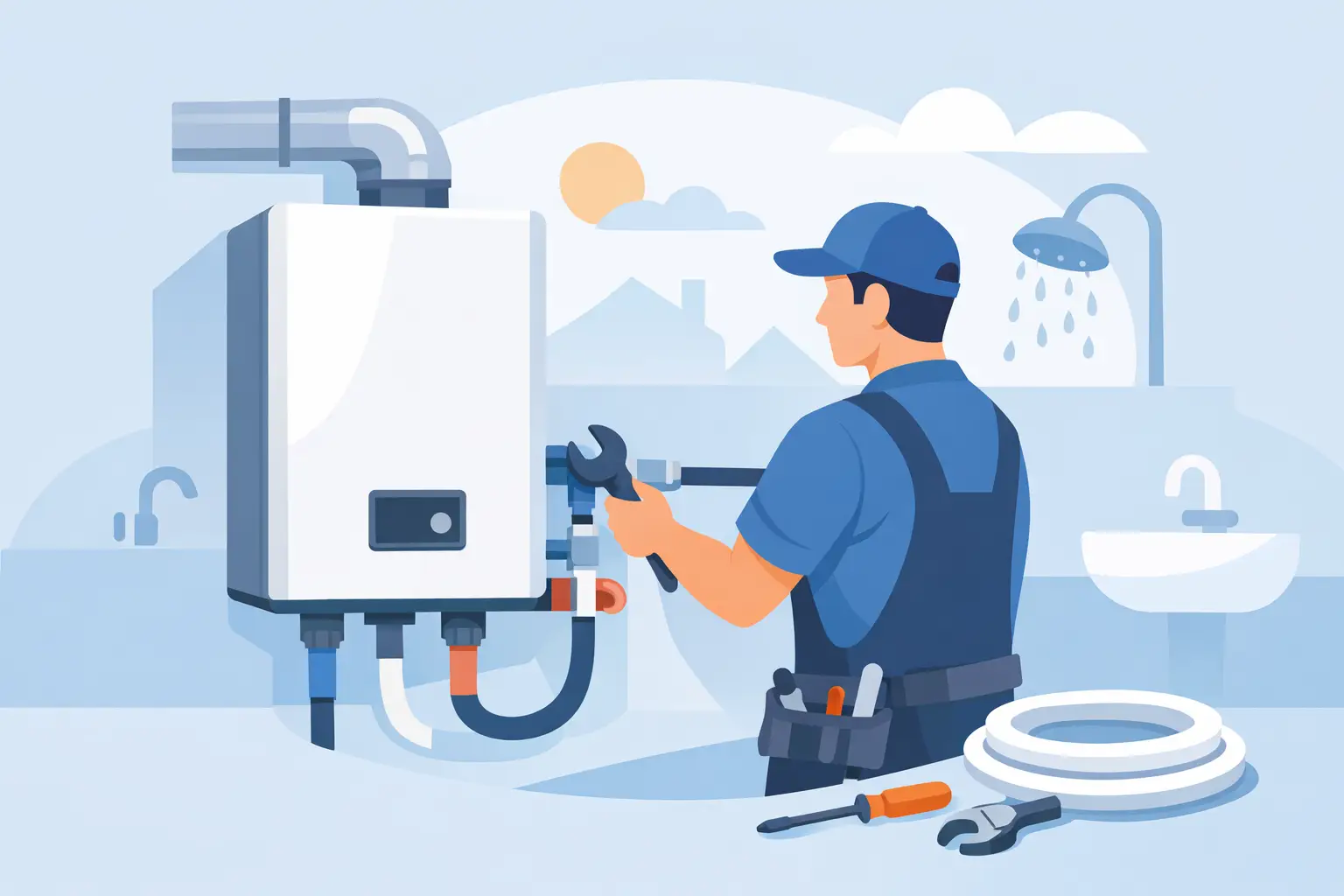
A cold shower usually gets people interested in water heaters fast. But when you are planning ahead, tankless water heater installation is less about chasing a trend and more about making sure your home can deliver hot water reliably, efficiently, and without surprises after the work is done.
For many homeowners in Hudson and nearby Massachusetts communities, tankless systems are appealing for good reason. They take up less space than a storage tank, can reduce standby energy loss, and provide hot water on demand. The catch is that a tankless unit is not a simple swap in every home. Fuel supply, venting, electrical requirements, water quality, and household demand all need to line up before installation starts.
Is tankless water heater installation right for every home?
Not always, and that is the part homeowners deserve to hear clearly.
A tankless water heater works by heating water as it passes through the unit. That means performance depends on flow rate and temperature rise, not just the size of a tank sitting full in the basement. If your household often runs two showers, a washing machine, and a dishwasher at the same time, the system has to be sized for that real-world demand. If it is undersized, you may still get hot water, just not enough at once.
That does not mean tankless is a bad fit. It means proper sizing matters more than marketing claims. A smaller home with modest hot water demand may do very well with one unit. A larger home may need a higher-capacity model or, in some cases, more than one unit to serve different parts of the house.
What happens during tankless water heater installation?
A professional installation starts with evaluation, not equipment delivery.
The first step is looking at how your home uses hot water. That includes the number of bathrooms, peak usage times, fixture counts, and whether you use natural gas, propane, or electricity. In Massachusetts homes, incoming water temperatures can be cold for a good part of the year, so the unit must work harder to raise water to a comfortable temperature. That affects sizing in a real way.
From there, the installer checks the mechanical setup. Gas-fired tankless units often need a larger gas line than the old tank water heater used. That surprises many homeowners. A unit may be compact on the wall, but it can have a high BTU demand. If the gas supply is too small, the heater will not perform the way it should.
Venting is another major factor. Many older tank water heaters use a basic venting setup that cannot simply be reused. Tankless systems typically require specific vent materials and vent lengths based on the manufacturer and the installation location. If the venting is wrong, efficiency, safety, and code compliance are all affected.
Electrical work may also be part of the job. Even gas tankless units need power for controls, ignition, and fans. Electric tankless models often require substantial electrical capacity, which can make them less practical in some homes unless the panel and service can support the load.
Finally, the old water heater is removed, the new system is mounted and connected, and the unit is tested under operating conditions. That includes checking gas pressure, water flow, venting, combustion, and temperature settings.
The biggest factors that affect cost
Homeowners often ask why pricing for tankless systems can vary so much. The unit itself is only part of the answer.
Tankless water heater installation can involve gas line upgrades, new venting, condensate management for high-efficiency models, electrical work, water line modifications, and code-related changes. If your current setup already supports the new system well, the project may be fairly straightforward. If your home needs infrastructure updates, the job becomes more involved.
That is why a quote based only on the appliance price can be misleading. A reliable estimate should reflect the full installation, not just the box on the wall.
Why sizing matters more than most homeowners expect
The most common installation mistake is choosing a unit based on brand recognition or advertised performance instead of household demand.
A tankless heater is rated by how many gallons per minute it can heat at a given temperature rise. In winter, when groundwater is colder, the system has to work harder than it does in warmer months. A home that seems fine on paper can run into comfort issues if that seasonal difference is ignored.
This is where experience matters. An installer should look beyond square footage and ask how your home actually functions. Do you have teenagers showering back-to-back? Do you fill a soaking tub? Is there a finished basement or an addition with another bathroom? Those details shape the right recommendation.
Water quality and maintenance are part of the decision
Tankless units are efficient, but they are not maintenance-free.
In areas with mineral-heavy water, scale can build up inside the heat exchanger over time. That buildup reduces performance and can shorten the life of the system if it is not addressed. A professional may recommend periodic flushing and, in some homes, water treatment to help protect the unit.
That does not mean you should avoid tankless. It simply means the long-term picture matters. A good installation includes a plan for service, not just startup day.
Gas, electric, and the “best” choice
For most homes in this region, gas-fired tankless systems are the more practical option, especially when homeowners want whole-house hot water. They generally offer stronger performance for simultaneous demand and are often better suited to larger households.
Electric tankless units can work well in limited-use applications or in homes where the electrical capacity is already available. But whole-house electric models can require major panel and service upgrades. For many homeowners, that added cost changes the equation quickly.
There is no one-size-fits-all answer. The best choice depends on your fuel source, your budget, your hot water habits, and what your home can support safely.
Common concerns after installation
A well-installed tankless system should deliver dependable hot water, but homeowners sometimes notice a few differences compared with a tank-style heater.
There can be a slight delay before hot water reaches the tap. That is not usually a heater problem. It is often just the time it takes for hot water to travel through the plumbing lines. Some homes also notice a minimum flow requirement, meaning a very small trickle of water may not trigger the burner as expected.
These are the kinds of details worth discussing before installation. When expectations are clear, homeowners tend to be much happier with the result.
Choosing the right contractor for tankless water heater installation
This is not a project where you want guesswork.
A qualified installer should understand plumbing, gas piping, venting, code compliance, and system sizing. They should also be comfortable evaluating the broader condition of the home, because water heater work often touches several systems at once. That is especially true in older Massachusetts homes, where existing mechanical setups do not always match current equipment requirements.
Working with a local company that handles both installation and future service is also worth considering. If you ever need maintenance, troubleshooting, or emergency help, it is easier when the contractor already knows the system and how it was installed. For homeowners who want that kind of continuity, Mass Plumbing & Heating provides tankless water heater solutions with the practical guidance and responsive service local families expect.
When replacement makes sense
If your current tank water heater is leaking, running out of hot water, or nearing the end of its life, this is often the right time to look at options. Tankless can be a smart upgrade when you want to reclaim space, improve efficiency, or invest in longer-term comfort.
But the right answer is not always the newest option. Sometimes a high-quality tank replacement is the better fit for the home, the budget, or the usage pattern. A trustworthy recommendation should reflect that, not push one solution for every household.
The best tankless water heater installation starts with an honest look at how your home works today and what you want from it tomorrow. When the system is sized correctly and installed with care, it can be a reliable upgrade that earns its place every time someone turns on the hot water.
Leave a Reply