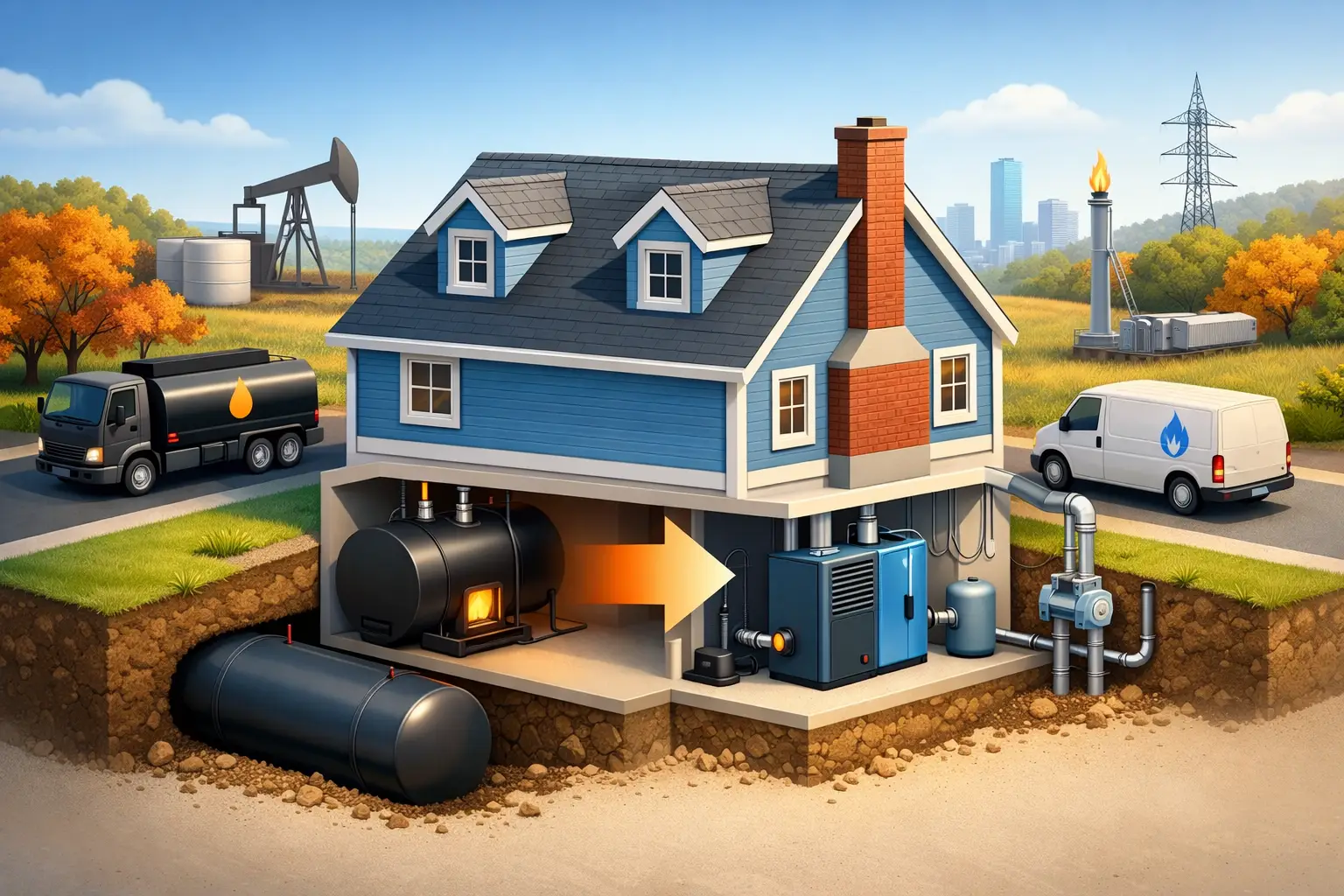
If your oil tank is aging, your boiler needs frequent repairs, or winter fuel bills keep climbing, an oil to gas conversion may be the right time to rethink how your home is heated. For many Massachusetts homeowners, the decision is not just about switching fuels. It is about reliability, cleaner operation, better efficiency, and getting ahead of expensive oil system problems before they turn into emergencies.
In older homes across Hudson and surrounding communities, oil heat is still common. That means plenty of homeowners are weighing the same question: should you keep repairing an oil-fired system, or invest in a gas upgrade that may serve the house better for years to come? The answer depends on your home, your equipment, and your long-term plans.
Why homeowners consider oil to gas conversion
For some households, the push starts with cost. Oil prices can fluctuate more sharply than natural gas rates, and that uncertainty makes budgeting harder. For others, it is the equipment itself. An old oil boiler or furnace may still run, but it can do so inefficiently, noisily, and with more maintenance than most homeowners want to deal with.
Gas heat appeals to people who want a simpler day-to-day experience. There is no on-site oil storage tank to monitor, no oil deliveries to schedule, and no concern about running out during a cold stretch if deliveries are delayed. Gas systems also tend to burn cleaner, which can mean less soot, less odor, and a cleaner mechanical room overall.
There is also the upgrade opportunity. An oil to gas conversion often happens when a homeowner is already replacing a boiler, updating heating zones, or improving domestic hot water performance. Instead of putting money into an aging oil setup, many people choose to put that investment toward a new gas-fired system that better matches current efficiency standards.
What changes during an oil to gas conversion
Every home is a little different, but the process is more involved than simply swapping one burner for another. In some cases, an existing boiler can be converted with the proper gas conversion burner, but many homes benefit more from replacing older equipment entirely. That is especially true when the boiler is near the end of its service life or when the chimney, controls, and venting setup also need attention.
A typical conversion may include bringing a gas line to the appliance, installing a new boiler or furnace, updating venting, connecting controls, removing or abandoning old oil components, and making sure the system is sized correctly for the home. If the property has an underground or basement oil tank, that may also need to be addressed as part of the project.
This is one reason professional evaluation matters. A proper plan is not just about getting gas heat working. It is about making sure the new system is safe, efficient, code-compliant, and appropriate for the house.
Oil to gas conversion costs: what affects the price
Homeowners usually want a simple number, but the real answer is that pricing can vary quite a bit. The largest factor is whether gas service is already available at the street and how easily it can be brought into the house. If the gas utility connection is straightforward, the project may be more manageable than expected. If new service work is needed, that can add time and cost.
The condition of your current heating system also matters. Replacing a very old oil boiler with a high-efficiency gas boiler is a different project than converting a newer oil-fired unit that is otherwise in good shape. Venting requirements can change the scope too. Some high-efficiency equipment uses sidewall venting, while other systems rely on chimney venting that may need a liner.
Then there is the rest of the heating system. Baseboard heat, radiant heat, steam systems, and domestic hot water needs all influence equipment choice. A home with multiple zones or a combination boiler setup may need a more tailored installation than a smaller, simpler home.
The good news is that a well-planned conversion can reduce future maintenance issues and improve fuel efficiency, which helps offset the upfront investment over time. Still, it is worth being realistic: this is usually a significant home upgrade, not a minor repair.
Is natural gas always the better choice?
Not always, and that is where honest guidance matters. In many homes, natural gas is a practical long-term improvement. But there are cases where the decision is less clear.
If your oil system is relatively new, operating efficiently, and not causing problems, replacing it immediately may not offer the best return. If gas service is not readily available, installation costs can be high enough that the payback takes longer than expected. Some homeowners also have concerns about future fuel choices and want to compare gas against options like heat pumps before making a final decision.
That does not mean conversion is a bad idea. It means the best decision should be based on the actual condition of your home and equipment, not on a one-size-fits-all pitch.
Benefits beyond fuel savings
People often focus on utility bills, but the value of an oil to gas conversion goes beyond monthly fuel cost. Newer gas systems can improve comfort by heating more consistently and responding better to thermostat calls. If your current oil system struggles to keep up in cold weather, a properly sized upgrade can make the house feel more even and dependable.
Maintenance can also become easier. Oil systems typically need regular service to address combustion residue and keep components clean. Gas equipment still needs professional maintenance, but the overall experience is often cleaner and less labor-intensive.
There is also the issue of space and condition. Removing an old oil tank, especially one that is deteriorating or taking up basement room, can be a meaningful improvement on its own. Homeowners who have dealt with tank concerns know that peace of mind matters.
Choosing the right gas system for your home
The best replacement system depends on how your home distributes heat. If you have hydronic baseboard, radiant, or steam, a boiler is usually the conversation. If you have ductwork, a furnace may be the better fit. In some homes, a high-efficiency boiler paired with an indirect water heater gives strong overall performance for both heat and hot water.
System sizing is critical. Bigger is not automatically better. Oversized equipment can short cycle, waste fuel, and create uneven comfort. Undersized equipment can struggle on the coldest days. A proper load calculation, review of your heat emitters, and understanding of your household hot water needs all help shape the right recommendation.
This is where experience with older Massachusetts homes really matters. Houses in this area often have a mix of original infrastructure and later additions, and the best solution needs to account for that.
Timing your conversion the smart way
Waiting until your oil boiler completely fails in January is rarely the ideal approach. Emergency replacements can limit options and put pressure on the decision. If your current system is showing signs of age – rising repair bills, uneven heating, burner issues, or tank concerns – it is worth planning ahead.
A scheduled conversion gives you more time to evaluate equipment options, understand project scope, and coordinate any fuel service work. It can also reduce the odds of facing a no-heat emergency when temperatures drop.
For many homeowners, the right time is when the oil system still works but is clearly nearing the point where further repairs stop making financial sense. That is the point where planning usually beats reacting.
What to ask before moving forward
Before approving an oil to gas conversion, ask how the new system will be sized, whether your chimney or venting needs changes, what happens with the old oil tank, and whether any gas piping upgrades are required. You should also ask about efficiency ratings, maintenance expectations, and whether the new setup will improve hot water production if that is one of your goals.
A good contractor should be comfortable explaining the trade-offs in plain language. Some homes are excellent candidates for conversion. Others may need a broader discussion about heating strategy. What matters is getting a recommendation based on your house, not a generic sales script.
For homeowners in Hudson and nearby communities, working with a company that understands both heating systems and gas piping can make the process more straightforward. That kind of full-service experience helps when a project touches multiple parts of the home.
An oil to gas conversion is a meaningful upgrade, but the best results come from good planning, honest expectations, and work that fits the home. If your current oil system is becoming more of a burden than a benefit, this may be the moment to move toward a heating setup that feels cleaner, simpler, and more reliable for the winters ahead.
Leave a Reply