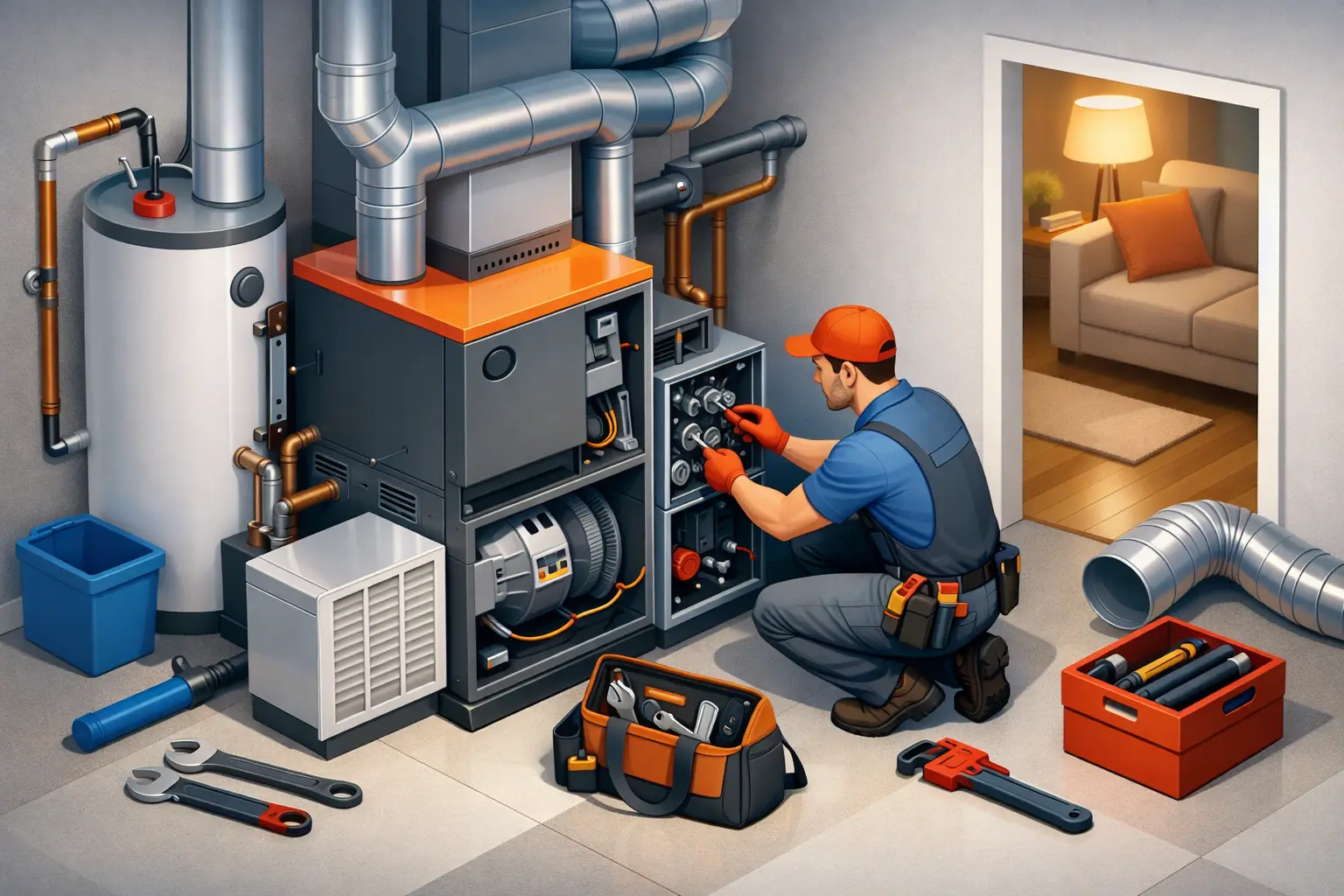
A furnace problem usually shows up at the worst possible time – on the first freezing night, during a weekend cold snap, or right before guests arrive. That is why furnace installations and repair matter so much for homeowners. When your heating system is working properly, you do not think much about it. When it is not, comfort, safety, and energy costs all become immediate concerns.
For most homeowners, the real question is not just how a furnace works. It is whether the current system can be trusted for another season, whether a repair will actually solve the issue, and whether a replacement is the smarter long-term move. Those answers depend on the age of the unit, the condition of the ductwork and fuel connections, the repair history, and how the system has been performing lately.
When furnace installations and repair become urgent
Some heating issues build slowly. Others need attention right away. If your furnace is blowing cool air, making sharp banging or screeching noises, cycling on and off too often, or failing to keep the house at a steady temperature, it is time to have it checked. A sudden spike in your utility bill can also point to a furnace that is struggling to run efficiently.
There is also the safety side. Any system that burns fuel needs proper venting, clean combustion, and reliable controls. If you smell gas, notice unusual soot, or suspect a carbon monoxide issue, do not wait. Shut the system down if it is safe to do so and call for service immediately. Fast response matters with heating equipment because a comfort issue can quickly become a household safety issue.
In Massachusetts, winter weather does not leave much room for delays. A small ignition problem in mild weather can turn into a no-heat emergency once temperatures drop. That is why homeowners often benefit from acting early instead of waiting for a full failure.
Repair or replacement? It depends on the system
Not every faulty furnace needs to be replaced. In many cases, a focused repair can restore safe and dependable heat without the cost of a full installation. Problems with igniters, thermostats, flame sensors, blower motors, belts, filters, or electrical components are often repairable, especially if the unit is otherwise in good shape.
But there is a point where repeated repairs stop making financial sense. If the furnace is 15 to 20 years old, needs frequent service, struggles to heat evenly, or has a cracked heat exchanger or major mechanical failure, replacement is often the more practical option. You are not just paying for the repair itself. You are also paying for uncertainty, reduced efficiency, and the possibility of another breakdown soon after.
A newer system with one isolated issue is a different story than an older furnace with a long list of symptoms. The right recommendation should reflect the actual condition of the equipment, not a one-size-fits-all sales pitch. Homeowners deserve a clear explanation of what is wrong, what it will cost to fix, and how long the system is likely to keep going.
What to expect from a furnace installation
A furnace installation is more than swapping one box for another. A good installation starts with matching the system to the home. If a furnace is oversized, it may short cycle and wear out faster. If it is undersized, it may run constantly and still leave rooms cold. Proper sizing affects comfort, efficiency, and long-term reliability.
The installer should also look at the full setup around the furnace. That includes ductwork condition, airflow, filtration, venting, gas or oil connections, thermostat compatibility, drainage for high-efficiency units, and any code or safety upgrades needed during the replacement. A furnace can only perform as well as the system around it allows.
For some homes, installation is also the right time to make broader improvements. That might mean upgrading an outdated thermostat, improving return airflow, replacing old venting materials, or addressing rooms that have never heated evenly. These details can make a major difference in how the new system performs after the install is complete.
Homeowners sometimes ask how long installation takes. In many straightforward cases, it can be completed in a day. More complex projects may take longer, especially if the job involves fuel conversions, venting changes, duct modifications, or correcting older workmanship issues. A professional installer should explain the scope clearly before work begins so there are no surprises.
Common furnace repair issues homeowners see
Most furnace repairs fall into a handful of categories. Airflow problems are very common. A clogged filter, blocked return, dirty blower assembly, or failing motor can reduce heat output and put strain on the system. Ignition issues are another frequent cause of no-heat calls, especially in older equipment.
Thermostat problems can also mimic furnace failure. Sometimes the issue is not the furnace itself but the controls telling it when to run. Wiring faults, failing sensors, or incorrect settings can all affect operation. In other cases, the furnace starts but shuts down quickly because a safety switch is detecting a condition that needs attention.
Wear and tear matters too. Bearings, belts, motors, and electrical parts do not last forever. If your furnace has started making new noises, that is worth checking before a small part failure leads to a larger repair. Strange sounds are often the system’s early warning sign.
Why efficiency matters in furnace installations and repair
Heating costs are a real concern for Massachusetts homeowners, especially during long winters. That makes efficiency an important part of any decision about furnace installations and repair. An older furnace may still run, but it may be using far more fuel than necessary to heat the home.
Repair can sometimes improve efficiency, particularly when the issue involves airflow restrictions, dirty components, or faulty controls. But if the system is outdated, replacement may offer a more meaningful drop in operating costs. High-efficiency equipment is designed to get more usable heat from the fuel it consumes, and that can add up over time.
That said, efficiency is not only about the furnace itself. Leaky ducts, poor insulation, thermostat problems, and neglected maintenance can all undermine performance. A homeowner may replace the furnace and still feel disappointed if the rest of the heating system was never addressed. Looking at the whole picture leads to better results.
Choosing the right local contractor
When you need heat restored, experience matters. So does communication. A good heating contractor should be able to diagnose the problem clearly, explain your options in plain language, and complete the work safely and professionally. That is especially important with gas connections, venting, combustion equipment, and emergency service situations.
Local homeowners often want more than a quick fix. They want to know who they are letting into their home and whether that company will be there if something goes wrong later. That is one reason many families prefer working with a trusted local expert instead of a call center-style operation. With a company like Mass Plumbing & Heating, the value is not just technical skill. It is having a dependable team that understands local homes, local winters, and the urgency of heating problems.
If you are comparing contractors, ask practical questions. Will they evaluate whether repair or replacement makes more sense? Do they handle both installation and troubleshooting? Do they offer emergency response if the system fails at night or over a weekend? Those details matter just as much as the equipment brand.
How to get more life out of your furnace
The simplest way to avoid major heating trouble is to stop small problems from building up. Regular maintenance helps catch worn parts, dirty burners, airflow restrictions, and safety concerns before they become expensive repairs. It also helps your furnace run more efficiently and more consistently through the heating season.
Homeowners can help by changing filters on schedule, keeping vents and returns clear, listening for changes in system noise, and paying attention to uneven heating or rising utility costs. Those signs are easy to ignore when the system still technically runs, but they often point to issues that are easier to address early.
If your furnace is older, proactive service becomes even more important. Aging systems usually give warning signs before they fail completely. Acting on those signs can give you more control over timing, budget, and replacement planning instead of forcing a rushed decision during an emergency.
A warm house in winter should not feel uncertain. If your furnace has been unreliable, noisy, inefficient, or simply hard to trust, getting it evaluated now can save stress later and help you make a smart decision before the next cold stretch arrives.
Leave a Reply