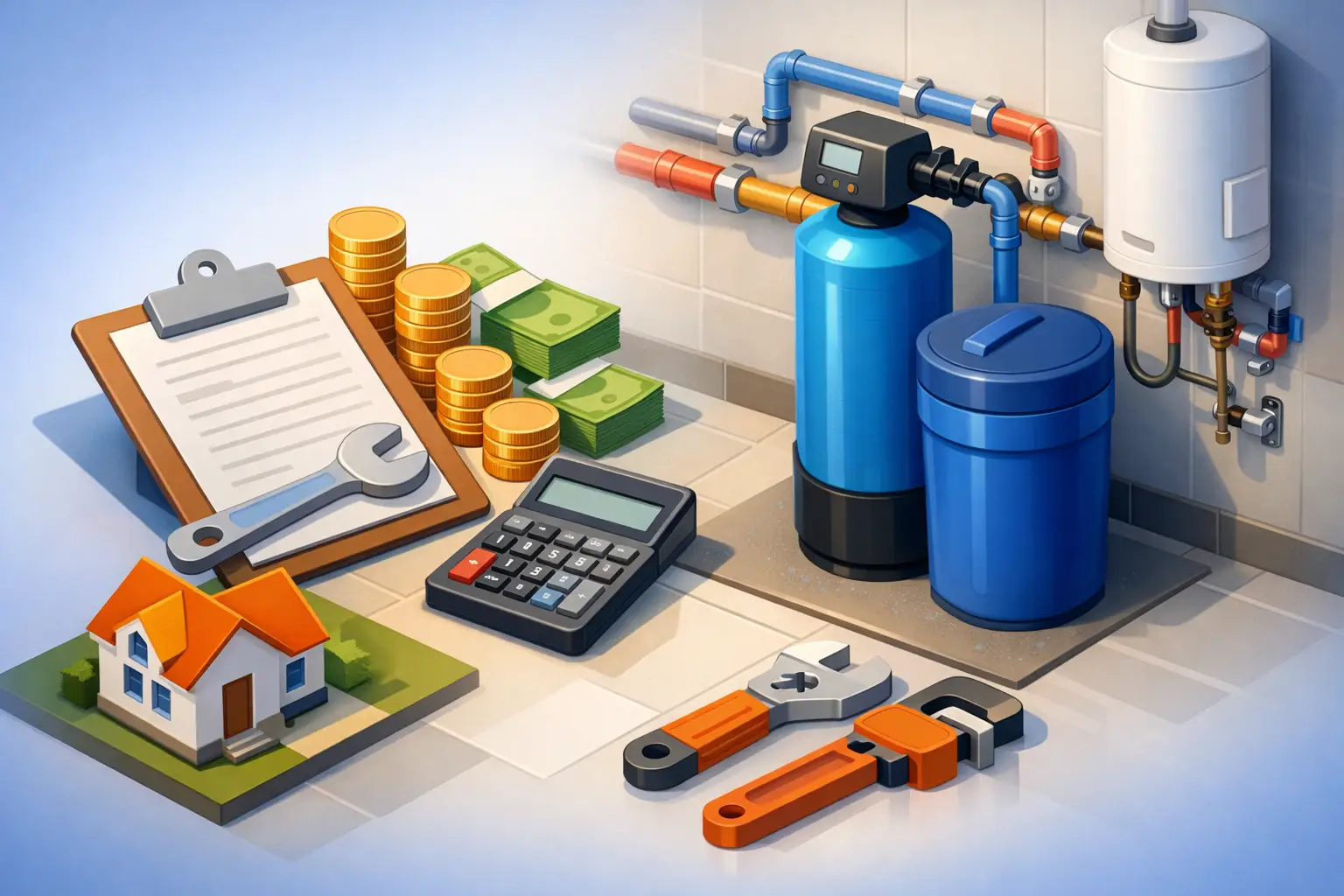
Hard water usually shows up in small, annoying ways first – white spots on dishes, soap that will not lather well, dry skin, and scale buildup around faucets. Then it starts costing you money through shorter appliance life, clogged fixtures, and reduced water heater efficiency. If you are researching water softener installation cost, you are probably already weighing whether the upfront investment is worth it for your home.
For many homeowners, the answer depends on more than the price of the unit itself. The full cost can change based on the type of softener, your home’s plumbing layout, your water usage, and whether any code updates or additional treatment equipment are needed. A clear estimate should account for the whole job, not just the box being installed.
What affects water softener installation cost?
The biggest factor is the type and size of the system. A smaller home with moderate water use may only need a basic ion-exchange softener sized for one or two bathrooms. A larger household with multiple bathrooms, a high-capacity water heater, irrigation considerations, or heavy daily demand may need a larger system with more resin capacity and stronger flow performance.
Brand and features also matter. Some systems are straightforward and reliable, while others include demand-initiated regeneration, digital controls, leak alerts, Wi-Fi monitoring, or paired filtration stages. Those upgrades can add convenience and efficiency, but they also raise the installed price.
The plumbing setup in the home plays a major role as well. If the main water line is easy to access and there is a practical installation area near a drain and power source, labor is usually more straightforward. If the installer needs to reroute piping, add a drain connection, create a bypass assembly, or work in a tight unfinished basement or utility area, labor time increases.
In Massachusetts homes, age can be a factor. Older houses sometimes have a plumbing layout that needs adjustment before a softener can be installed properly. Existing shutoffs may need replacement, pipe materials may require extra care, and space planning can be more involved than in a newer home.
Typical water softener installation cost ranges
For a professionally installed residential system, many homeowners can expect a water softener installation cost somewhere between about $1,500 and $4,000. That is a broad range because every house is different, but it is a useful starting point for budgeting.
At the lower end, you are typically looking at a simpler installation with a standard softener in a home that already has a good location for the system. At the higher end, the cost may include a larger-capacity unit, plumbing modifications, upgraded controls, or a combined treatment approach that addresses both hardness and other water quality concerns.
Some projects go above that range. That often happens when a home needs both softening and filtration, or when the installer is correcting older plumbing issues at the same time. If your water contains iron, manganese, sediment, or problem odors, a softener alone may not be the complete solution.
That is why a quick price found online can be misleading. A unit price is not the same thing as a finished installation that performs well, drains properly, and fits the home safely.
System type changes the price
Most homeowners are considering a salt-based ion-exchange softener, which is still the standard choice for true hardness removal. These systems exchange calcium and magnesium ions for sodium or potassium, which helps reduce scale buildup throughout the home. They are effective, dependable, and widely used, but they do require ongoing salt refills and periodic maintenance.
Salt-free systems are often marketed as a lower-maintenance option. In some cases, they can help reduce scale formation, but they do not remove hardness in the same way a traditional softener does. They may be a reasonable fit for certain homes, but they are not always the right answer if hard water is causing significant buildup or appliance wear.
Dual-tank or high-efficiency models can cost more upfront, but they may make sense for larger households or homes that cannot afford interruptions in soft water supply. If the home has high demand, choosing too small a system can create performance problems and reduce the value of the installation.
Installation details that add to the total cost
The labor portion of water softener installation cost can vary more than homeowners expect. A few details often make the difference.
If there is no nearby drain for the regeneration discharge, one may need to be added or extended. If there is no electrical outlet in the installation area, that can affect setup as well. If the incoming main line is in a cramped corner or tied into older piping, the work can take longer and require more planning.
Bypass valves, shutoff valves, expansion considerations, and code-compliant drain connections are all part of doing the job correctly. These are not flashy line items, but they matter. A proper installation should make future service easier and protect the rest of the plumbing system.
There is also the question of pre-treatment and post-treatment. If your home has sediment, acidity, or iron issues, the recommended system may include additional equipment before or after the softener. That raises the total project cost, but it can also prevent premature wear and improve performance.
Is DIY installation worth it?
Some homeowners look at a boxed system and wonder if installing it themselves will save enough to justify the effort. It can reduce labor costs in a simple situation, but there are trade-offs.
A water softener needs to be sized correctly, placed in the right location, tied into the main water supply in the proper direction, connected to a drain safely, and programmed for the household’s usage and hardness level. If any part of that is off, the system may not work as intended. You could end up with pressure loss, salt overuse, drain problems, leaks, or untreated water reaching parts of the home.
For many homeowners, professional installation is less about convenience and more about getting a system that performs properly from day one. It also gives you a chance to confirm whether a softener is the right solution in the first place.
How to judge value, not just price
The lowest quote is not always the best value. A cheaper install may leave out water testing, use an undersized unit, skip plumbing improvements, or fail to address related issues that affect performance. Over time, that can lead to more service calls and disappointing results.
A good estimate should explain what system is being installed, why it was selected, what plumbing work is included, and whether any extras may be needed based on the home’s layout or water quality. Homeowners should also ask about maintenance, expected salt use, warranty coverage, and what kind of support is available if the system needs adjustment after installation.
That matters even more when you are planning for the long term. A properly selected and installed softener can help protect water heaters, dishwashers, washing machines, shower valves, and fixtures. It may also improve soap performance and reduce the amount of cleaning needed around sinks, tubs, and glass.
When a softener makes the most financial sense
If your water is only mildly hard and you are not seeing many problems, the payback may feel less obvious. But in homes with noticeable scale, appliance issues, or frequent fixture buildup, softening often makes practical sense. It can reduce wear on equipment and help your plumbing system run more efficiently.
Water heater performance is one area homeowners often overlook. Hard water scale inside a water heater can reduce efficiency and increase strain on the system over time. If you are already protecting an investment in a newer water heater, addressing hard water may help that equipment last longer.
Families also notice the day-to-day difference. Softer water can be easier on skin, hair, towels, and clothing. Those comfort benefits may not show up on a quote sheet, but they are part of the decision.
Getting an accurate estimate for your home
The most useful estimate comes from looking at the actual house, not from guessing over the phone. A contractor should consider the home’s water usage, hardness level, plumbing access, drain options, and whether any related treatment is needed. That is how you get a realistic picture of water softener installation cost instead of a number that changes later.
For homeowners in Hudson and nearby communities, working with a local plumbing company that understands area homes and water conditions can make that process easier. A team like Mass Plumbing & Heating can help you sort out whether a standard softener is enough or whether your home would benefit from a broader water treatment setup.
If hard water has been quietly wearing down your fixtures and equipment, this is one upgrade that often pays off in ways you notice every day. The right question is not just what it costs to install, but what it costs to keep living with the problem.
Leave a Reply