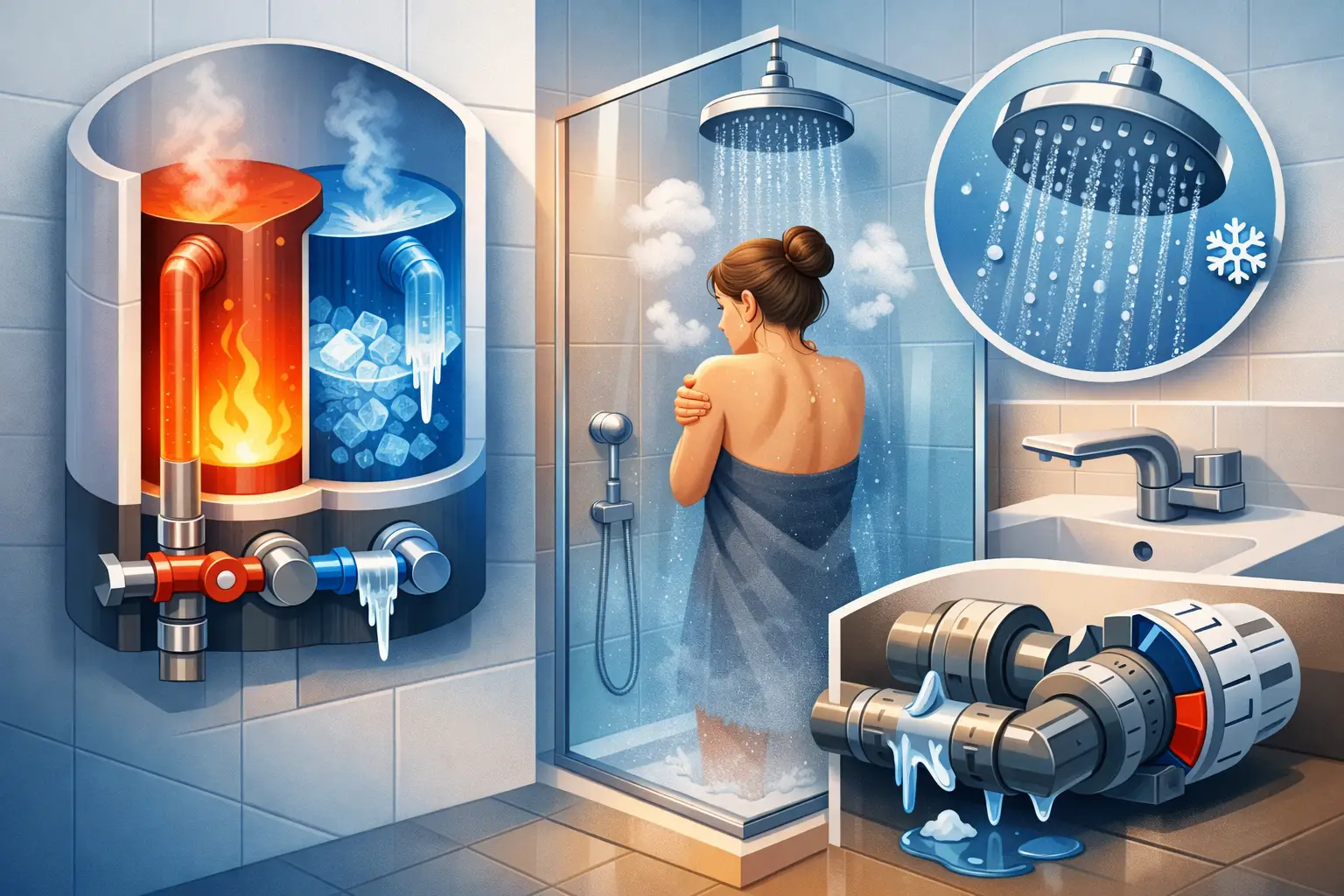
A shower that turns cold halfway through the morning routine usually feels like it came out of nowhere. If you’re asking why is shower water cold, the answer is usually tied to one of a few home system issues – your water heater, your plumbing fixtures, or how hot water is being used elsewhere in the house.
The good news is that some causes are simple and temporary. Others point to a repair that should not be ignored, especially if the problem is getting worse, affecting multiple fixtures, or showing up alongside leaks, noises, or inconsistent water temperature throughout the home.
Why Is Shower Water Cold Even When the Sink Is Hot?
This is one of the most common clues homeowners notice, and it matters. If the sink gets hot water but the shower stays lukewarm or cold, the issue may not be your entire hot water supply. It may be isolated to the shower valve, the anti-scald setting, or a cartridge inside the fixture that is no longer mixing hot and cold water correctly.
Modern shower valves are designed to protect against sudden temperature swings. That is a good thing, especially for families with children, but these parts can wear out or get out of adjustment over time. When that happens, the valve may limit hot water too much or fail to pull enough hot water through at all.
If only one shower is affected, the water heater is less likely to be the main problem. If every shower and faucet in the house is cold or running out quickly, it is more likely to be a system-wide issue.
The most common reasons shower water turns cold
In many homes, the simplest explanation is that the hot water supply is running out. Traditional tank water heaters store a fixed amount of hot water. Once that supply is used up, the heater needs time to recover. A long shower, back-to-back showers, laundry, or a running dishwasher can use more hot water than the tank can keep up with.
This becomes especially noticeable in larger households or in homes with an older water heater. Sediment buildup inside the tank can also reduce the effective amount of hot water available. So even if the heater is technically working, it may not be performing like it used to.
A thermostat issue is another possibility. If the water heater is set too low, or if one of the thermostats or heating elements is malfunctioning, the water may never get fully hot. Electric water heaters often have upper and lower elements, and if one fails, you can end up with limited hot water that fades fast.
Gas water heaters bring a different set of possibilities. A pilot light problem, burner issue, gas supply interruption, or venting problem can all affect heating performance. Sometimes the unit still produces some warm water, which makes the issue harder to spot right away.
Then there is the shower itself. A worn pressure-balancing valve or mixing cartridge can cause cold water to overpower the hot side. In some cases, the shower starts warm and then shifts colder as the valve struggles to maintain temperature.
Why is shower water cold in only one bathroom?
When the problem is limited to one bathroom, it usually points to a local plumbing or fixture issue rather than the main water heater. The shower cartridge may be clogged with mineral buildup or simply worn out. The anti-scald limit could also be set too conservatively, which restricts how much hot water reaches the shower.
Homes in Massachusetts can see mineral scaling over time depending on water conditions and equipment setup. That buildup can interfere with moving parts inside the valve body and affect how the shower blends hot and cold water.
There is also the possibility of a hidden cross-connection. That means cold water is mixing into the hot line somewhere it should not. A faulty single-handle faucet, mixing valve, or other fixture can sometimes create this problem. It is less common, but when it happens, it can be frustrating to diagnose without proper testing.
Signs your water heater may be the real problem
If the shower goes cold and so do the sinks, tubs, and other fixtures, the water heater deserves a closer look. Age is a major factor. A standard tank water heater often lasts around 8 to 12 years, depending on maintenance, water quality, and usage. Tankless systems can last longer, but they still require regular service.
Listen for rumbling or popping noises from the tank. Check for rust-colored water, moisture around the unit, or a noticeable drop in how long hot water lasts. These signs often show up before a complete failure.
It also matters whether the water is fully cold or just not hot enough. Fully cold water can suggest the heater is not firing or heating at all. Lukewarm water often points to sediment, a thermostat problem, a failed element, or undersized equipment struggling to meet demand.
If your system has been meeting your household’s needs for years and suddenly cannot keep up, that is a warning sign. If it has never kept up well, the issue may be sizing rather than repair.
What you can safely check before calling a plumber
Start with the obvious. See whether the issue affects only the shower or the entire house. Run hot water at a nearby sink and another bathroom if possible. This quick test helps narrow down whether you are dealing with a fixture problem or a larger hot water issue.
Next, consider timing. Did the shower turn cold after someone ran the dishwasher or did multiple people shower back to back? If so, you may simply be exhausting the available hot water. That does not always mean something is broken, but it may mean your current setup is not matching your household’s needs.
If you have a tank water heater, check the thermostat setting if it is safely accessible. Do not disassemble anything, and do not attempt gas or electrical repairs on your own. For many homeowners, visual checks are enough. Look for leaks, error codes, an extinguished pilot light if you know how to identify one, or signs that the unit has lost power.
At the shower, notice whether the handle feels stiff, loose, or inconsistent. That can point toward a cartridge or valve issue. If the temperature changes sharply when another fixture runs, pressure balancing may be part of the problem.
When cold shower water means you should call for service
If you have no hot water anywhere in the home, service is the right next step. The same goes for a leaking water heater, repeated pilot light issues, breaker trips, discolored water, or sudden changes in performance from an older unit.
You should also call if only one shower is affected and basic checks suggest the rest of the house has hot water. Shower valve repairs are often straightforward for a trained plumber, but the exact cause can be hard to pinpoint without opening the fixture and testing the components.
For households that regularly run out of hot water, the answer may not be a repair at all. It could be time to discuss a replacement, a larger tank, or a tankless or hybrid system better suited to your usage. A dependable local contractor like Mass Plumbing & Heating can help determine whether the issue is wear, repairable component failure, or a system that no longer fits the home.
Preventing future cold shower problems
Regular maintenance makes a difference. Water heaters work hard every day, and they perform better when sediment is managed, components are inspected, and minor issues are handled before they become major failures.
Fixture maintenance matters too. Shower valves and cartridges do not last forever, and replacing worn parts can restore proper temperature control before the problem becomes more disruptive.
It is also worth thinking about how your home uses hot water. A family of five has very different demand than a one- or two-person household. Home additions, finished basements, and newer high-flow fixtures can all change the load on your hot water system.
Cold shower water is frustrating, but the cause is usually identifiable with the right troubleshooting. Sometimes it is just a matter of demand outrunning supply. Sometimes it is a worn shower part. And sometimes it is your water heater telling you it needs attention before it fails completely. The sooner you pinpoint the reason, the sooner your home gets back to normal.
Leave a Reply