If you are deciding between radiant heat vs baseboard heating, the real question is not which system is better on paper. It is which one fits your home, your comfort preferences, and your budget in a Massachusetts winter. A heating system can look great in a brochure and still be the wrong choice for your layout, flooring, boiler setup, or renovation plans.
For many homeowners, this decision comes up during a boiler replacement, a remodel, or when an older heating system starts showing its age. Both radiant heat and baseboard heating can keep a home warm and comfortable. But they do it in very different ways, and those differences affect everything from energy use to furniture placement.
Radiant heat vs baseboard heating: the basic difference
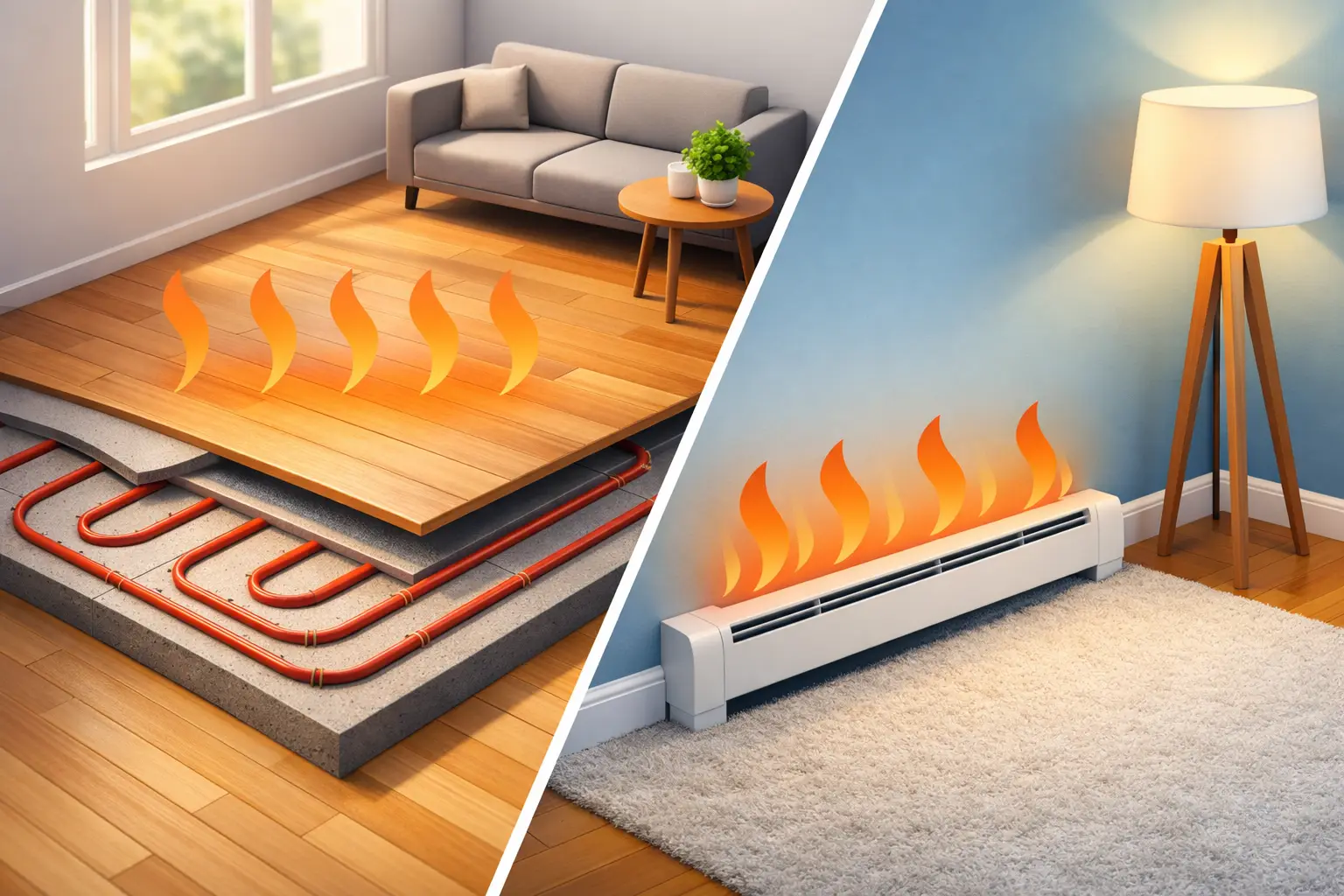
Baseboard heating warms a room from the perimeter. In a hydronic system, hot water moves through baseboard units installed along the walls, and the heat rises into the room. This is a familiar setup in many New England homes because it is reliable, relatively straightforward to install, and works well with boiler systems.
Radiant heat works more quietly and more evenly. Instead of heating the air near the walls first, it warms the floor surface or another broad area, which then radiates heat upward. In most homes, that means tubing installed beneath the floor and connected to a boiler. You feel the warmth across the room rather than just near the heating element.
That difference changes the experience of the room. Baseboard heat tends to create warmer zones near the units and cooler spots farther away. Radiant heat usually feels more consistent from wall to wall.
Comfort is where radiant often stands out
If comfort is your top priority, radiant heat usually gets the edge. Warm floors on a cold morning are hard to beat, especially in bathrooms, kitchens, and finished basements. The heat feels gentle and steady, without the temperature swings some homeowners notice with other systems.
Baseboard heating can still provide solid comfort, especially when the system is sized correctly and maintained well. Many homes in Hudson and the surrounding area rely on baseboard heat every winter without issue. But it does heat in a more noticeable cycle. Rooms can feel warm when the system is actively running and a little less even when it is not.
Radiant heat also reduces drafts because it does not rely on blowing air around. That can make a room feel warmer even at a slightly lower thermostat setting. For some families, that translates to better comfort and lower operating costs. For others, the difference is noticeable but not dramatic enough to justify a major retrofit.
Installation cost and complexity matter
This is where the choice often becomes practical very quickly. Baseboard heating is usually the less expensive and less invasive option to install, especially in an existing home. If you already have a compatible boiler and piping layout, replacing old baseboards or extending heat to an addition can be fairly manageable.
Radiant heat is more involved. In new construction or a major renovation, it can be an excellent fit because the floors are already open. In an existing home, adding radiant tubing under finished floors can require significant labor, floor height adjustments, or access from below. That does not make it a bad investment, but it does mean the project needs careful planning.
If your home already has baseboard heat and the system works reasonably well, switching the entire house to radiant may not be the most cost-effective move. On the other hand, adding radiant heat to a single space, such as a bathroom, mudroom, or basement, can be a smart upgrade that improves comfort where you notice it most.
Efficiency depends on the house and the system design
Homeowners often assume radiant heat is always more efficient. Sometimes it is, but not automatically.
Radiant systems can be very efficient because they deliver heat evenly and often operate at lower water temperatures than traditional baseboard systems. When paired with a high-efficiency boiler and proper controls, they can offer excellent performance. They also help reduce the urge to crank the thermostat up and down because the heat feels more balanced.
Baseboard heating can also be efficient when it is properly designed and maintained. If the boiler is in good condition, the zones are set up well, and the home has decent insulation, baseboard heat can do the job effectively. In many homes, the biggest source of wasted energy is not the type of emitter at all. It is an older boiler, poor controls, air leaks, or lack of maintenance.
That is why heating choices should be looked at as part of the whole system. Boiler condition, insulation levels, window quality, and room-by-room heat loss all matter. The best setup is rarely about one component alone.
Radiant heat vs baseboard heating in older Massachusetts homes
Older homes present a special case. Many houses in this area were built long before modern heating expectations, and that affects what is realistic.
Baseboard heating often fits older homes better because it can work around the existing structure with less disruption. It is easier to adapt to rooms with uneven floors, finished walls, or limited access. If your goal is dependable heat without opening up large sections of the house, baseboard may be the simpler path.
Radiant heat can still work beautifully in older homes, but usually in targeted applications or during major renovations. A kitchen remodel, bathroom upgrade, or basement finishing project is often the right time to consider it. Trying to retrofit radiant heat throughout a fully finished older home can become expensive quickly.
There is also the flooring question. Tile and stone pair especially well with radiant heat because they transfer warmth effectively. Wood, vinyl, and other finishes can work too, but they need to be matched carefully with the system design.
Maintenance and repair considerations
Baseboard systems are generally easy to access. If a section is not heating properly, the issue may be traced to air in the line, a zone valve problem, sludge buildup, or the boiler itself. Because the components are exposed, troubleshooting is usually more straightforward.
Radiant systems are reliable when installed correctly, but repairs can be more complicated depending on where the tubing is located. The good news is that the tubing itself is designed for long-term performance. The more common service points are manifolds, pumps, controls, and boiler-related components rather than the tubing under the floor.
For a homeowner, the practical takeaway is simple. Baseboard heat is easier to modify and simpler to access. Radiant heat is cleaner visually and excellent for comfort, but it rewards good design and professional installation from the start.
How each system affects the room itself
This point gets overlooked until furniture starts moving in.
Baseboard heating takes up wall space. That can limit where you place couches, beds, and curtains. It also means the perimeter of the room needs to stay relatively clear for the heat to move properly. In some rooms, that is no problem. In others, especially smaller bedrooms or finished lower levels, it can be frustrating.
Radiant heat is hidden. There are no visible units along the walls, which gives you more flexibility in the room design. If you are remodeling and want a cleaner look, that can be a major advantage.
There is a trade-off, though. Radiant heat responds more slowly. If you like quick temperature changes, baseboard heat may feel more responsive. Radiant systems are better when you want steady, consistent warmth over time rather than fast adjustments.
Which one is right for your home?
If you want a lower upfront cost, easier installation, and a heating system that works well with many existing boiler setups, baseboard heating is often the practical choice. It has been common in this region for a reason. It is dependable, serviceable, and effective.
If your priority is premium comfort, even heat, and a cleaner-looking room without visible heating units, radiant heat is often worth serious consideration. It shines in bathrooms, kitchens, additions, and homes undergoing larger renovations.
Some of the best results come from using both. A home might keep baseboard heat in the main living areas while adding radiant heat in a remodeled bathroom or basement. That kind of blended approach can improve comfort without turning the project into a full-house overhaul.
A trusted local expert can help you look beyond the basic pros and cons and evaluate the system in the context of your actual home. Mass Plumbing & Heating works with homeowners across the area on boilers, radiant systems, baseboard heat, and heating upgrades, so the right answer can be based on how your home is built, not just what sounds best.
The right heating system is the one that keeps your family comfortable, fits your home without unnecessary complications, and makes sense for the way you plan to live there for years to come.
Leave a Reply