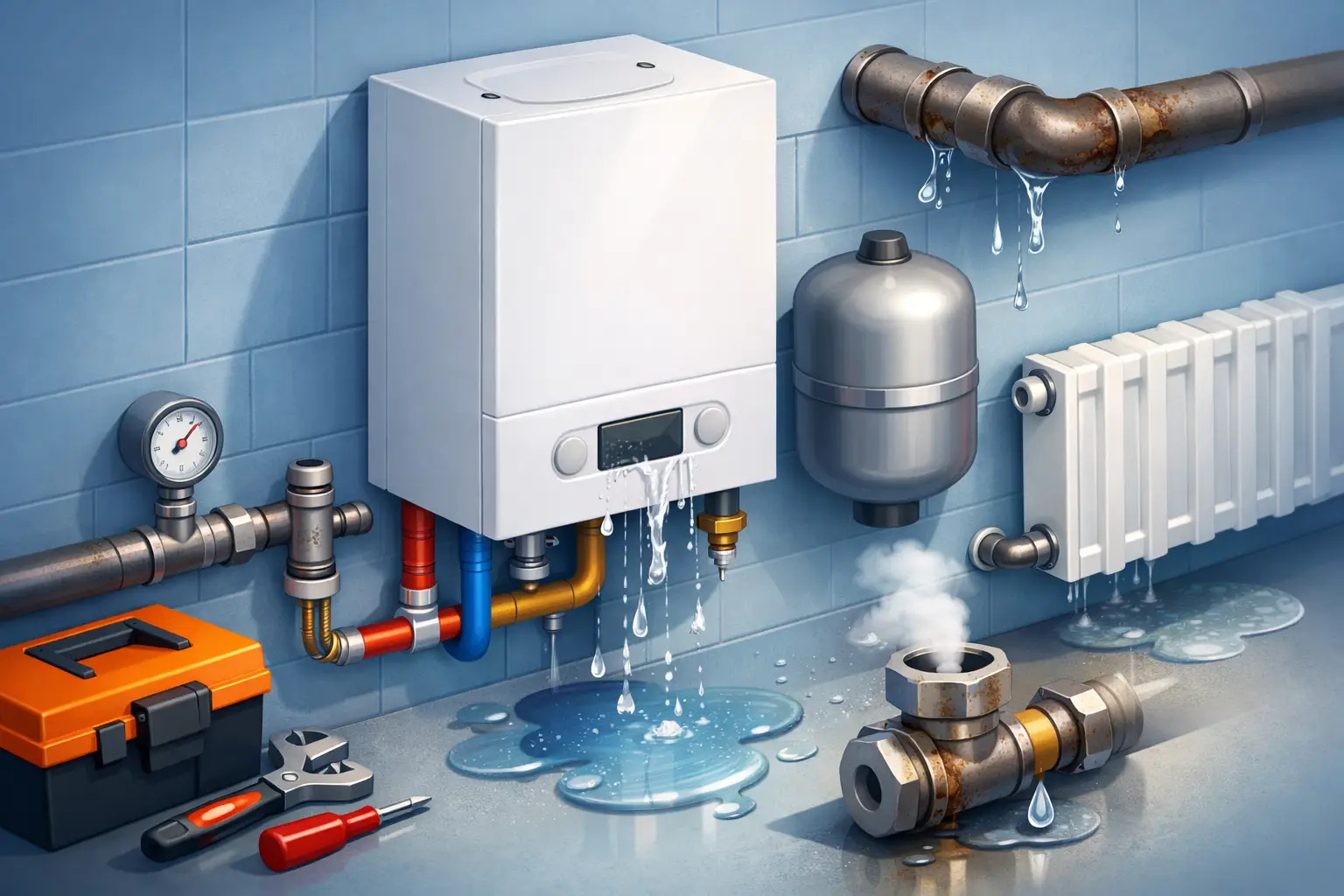
A boiler leak usually shows up at the worst possible time – early in the morning, on a cold night, or right when you notice the heat is not acting quite right. If you are asking, “why is my boiler leaking,” the short answer is that something in the system is failing, wearing out, or operating under the wrong pressure. The right next step depends on where the water is coming from, how much is leaking, and whether the boiler is still running normally.
Some leaks are minor at first, like a slow drip from a valve or fitting. Others point to a bigger problem, such as a failing pressure relief valve, corrosion inside the unit, or damage to a pump seal. Either way, a leaking boiler is not something to ignore. Water and heating equipment do not mix well, and a small leak can turn into a much more expensive repair if it keeps going.
Why is my boiler leaking around the unit?
Homeowners often describe a boiler leak as water “around the bottom,” but that does not always mean the boiler block itself is cracked. Water can travel along pipes, drip off nearby components, or collect under the system before it becomes visible. That is why the source matters more than the puddle.
One common cause is loose or worn pipe connections. Boilers heat and cool repeatedly, and that expansion and contraction can put stress on threaded fittings and joints over time. In some cases, the fix is relatively straightforward. In others, the leaking connection is a symptom of pressure problems elsewhere in the system.
Another frequent issue is a leaking circulator pump. The pump moves hot water through your heating system, and if its seals or flanges begin to fail, water may drip from the pump housing or collect beneath it. On older systems, corrosion can also eat away at metal parts until they start leaking.
The pressure relief valve is another likely suspect. This safety device is designed to release water if boiler pressure gets too high. If you see water near the relief valve discharge pipe, the valve may be doing its job because the system is over-pressurized, or the valve itself may be faulty and no longer sealing properly.
The most common reasons a boiler starts leaking
High boiler pressure
Boilers are designed to operate within a specific pressure range. When pressure climbs too high, the system may force water out through the relief valve to protect itself. High pressure can be caused by a faulty pressure reducing valve, a waterlogged expansion tank, or a problem during recent service or refilling.
This is one of those situations where the visible leak is not always the main problem. The water on the floor may be coming from a valve, but the real issue is the pressure condition inside the system.
A failing expansion tank
The expansion tank helps manage the natural increase in water volume as it heats up. If that tank loses its air charge or fails internally, pressure in the boiler system can rise and trigger leaks. Sometimes this leads to relief valve discharge. Other times it puts strain on fittings and other components.
Expansion tank problems are common on older systems and often show up as pressure swings, intermittent leaking, or noisy operation.
Corrosion inside the boiler
Age matters with boilers. Over time, corrosion can weaken sections of the heat exchanger, valves, or internal components. If the boiler itself is rusting through, the leak may come directly from the unit rather than from an attached part.
This is where repair versus replacement becomes a real conversation. A valve or pump can often be replaced. A corroded boiler section is a much bigger issue, and in many cases, replacement is the more practical long-term choice.
Worn seals, gaskets, or pump flanges
Boilers have several mechanical connection points that rely on gaskets and seals. As these materials age, they can dry out, crack, or lose their ability to hold under temperature and pressure. The leak may start small and only appear while the boiler is actively heating.
This kind of issue is usually repairable, but it still should be addressed promptly before water damages nearby components.
Problems with the drain valve or relief valve
A drain valve that does not close fully can drip steadily and create the impression that the whole boiler is leaking. Relief valves can also begin to seep with age, mineral buildup, or repeated pressure events. In both cases, replacing the valve may solve the leak, but the system should still be checked to make sure the valve was not reacting to another problem.
Why is my boiler leaking from the bottom?
When water is pooling underneath the boiler, people understandably worry about the worst-case scenario. Sometimes that concern is justified, but not always. A leak from the bottom can come from a pump mounted low on the system, a nearby valve, or condensation in certain high-efficiency equipment.
If you have a condensing boiler, some moisture may be related to the condensate system rather than the heating water side. A blocked condensate line, cracked trap, or issue with the neutralizer can allow water to back up or drip around the base. That is a different repair than a pressure or piping leak, so identifying the boiler type helps.
If the actual boiler block is leaking from underneath due to internal corrosion or a crack, that is more serious. In that case, repair options can be limited. The age of the unit, availability of parts, and overall condition of the system all factor into the decision.
What you can safely check before calling
A homeowner should not open the boiler cabinet or try to take apart hot-water or gas components, but there are a few simple observations that can help.
Start by looking at the pressure gauge if your system has one. If the pressure is much higher than normal, that is useful information to share when you call. Check whether the leak appears constant or only happens when the heat is running. Notice whether the water seems to be coming from a valve, a pipe joint, the circulator pump, or the body of the boiler itself.
You can also look for signs of rust, staining, or mineral buildup around fittings and valves. These clues often show where a slow leak has been developing over time. If the area is wet but the source is not obvious, dry the floor if it is safe to do so and monitor where new water first appears.
If the leak is active, protect the area around the boiler as best you can. Move stored items away from the water and place a container under a drip if it helps limit damage. If you see significant leaking, if pressure is rising quickly, or if the system is making unusual noises, shut off the boiler and call for service.
What not to do with a leaking boiler
It is tempting to tighten random fittings or keep resetting the system in hopes that the problem will clear up. That usually makes things worse. Boilers are closed, pressurized heating systems, and guessing at a repair can create safety risks or turn a manageable problem into a larger one.
Do not ignore the leak because the boiler is still producing heat. Many serious boiler issues start with a small amount of water. Do not keep adding water to the system without understanding why pressure is dropping. Fresh water introduces oxygen and minerals, which can speed up corrosion inside the system.
And if you smell gas, hear banging, or see water near electrical controls, stop there and get professional help right away.
When boiler leaking means you need repair fast
A boiler leak moves from inconvenient to urgent when water is actively running, the pressure relief valve is discharging, the boiler is shutting down, or you see corrosion on the unit itself. These are signs that the system needs more than a quick look.
For homeowners in Hudson and nearby Massachusetts communities, fast service matters in winter because a boiler problem can quickly turn into a no-heat problem. A dependable local contractor can determine whether the issue is a valve, tank, pump, condensate problem, or a more serious failure inside the boiler. In many cases, a targeted repair gets the system back online. In others, especially with older equipment, replacement may save money and stress over the next few seasons.
Mass Plumbing & Heating sees this often in homes with aging boilers, baseboard systems, radiant heat, and steam applications. The right repair starts with finding the true source of the leak rather than treating every puddle the same way.
The bottom line on a leaking boiler
If you are asking, “why is my boiler leaking,” the answer could be anything from a bad valve to an internal boiler failure. The key is not to wait for a small drip to become water damage, heating loss, or a full system breakdown. Catching the problem early usually gives you more repair options, lower costs, and a better chance of keeping your home comfortable when you need heat the most.
If something looks off, trust that instinct. A boiler should not leak, and getting it checked sooner is almost always the smarter move.
Leave a Reply